September 27th
And so the almost annual trek to Shetland began with the
northwards journey taking in Red kites aplenty along the major highways before
a stop at RSPB Old Moor near Barnsley in Yorkshire. This was a reserve tick for me and a warm
welcome saw us heading out in the sunshine in search of a Grey Phalarope.
The pools looked superb and 140 Golden Plover were idling
around with Lapwings and a couple of Black-tailed Godwits but the pesky
Phalarope was spinning around in the most shiny, into the sun spot imaginable
but it has been a while so I was pleased none the less.
 |
| Grey Phalarope |
A couple of Green
Sandpipers were added along with a collection of dabbling ducks before we
ambled back to the car but not before I got distracted by some flowering Sea
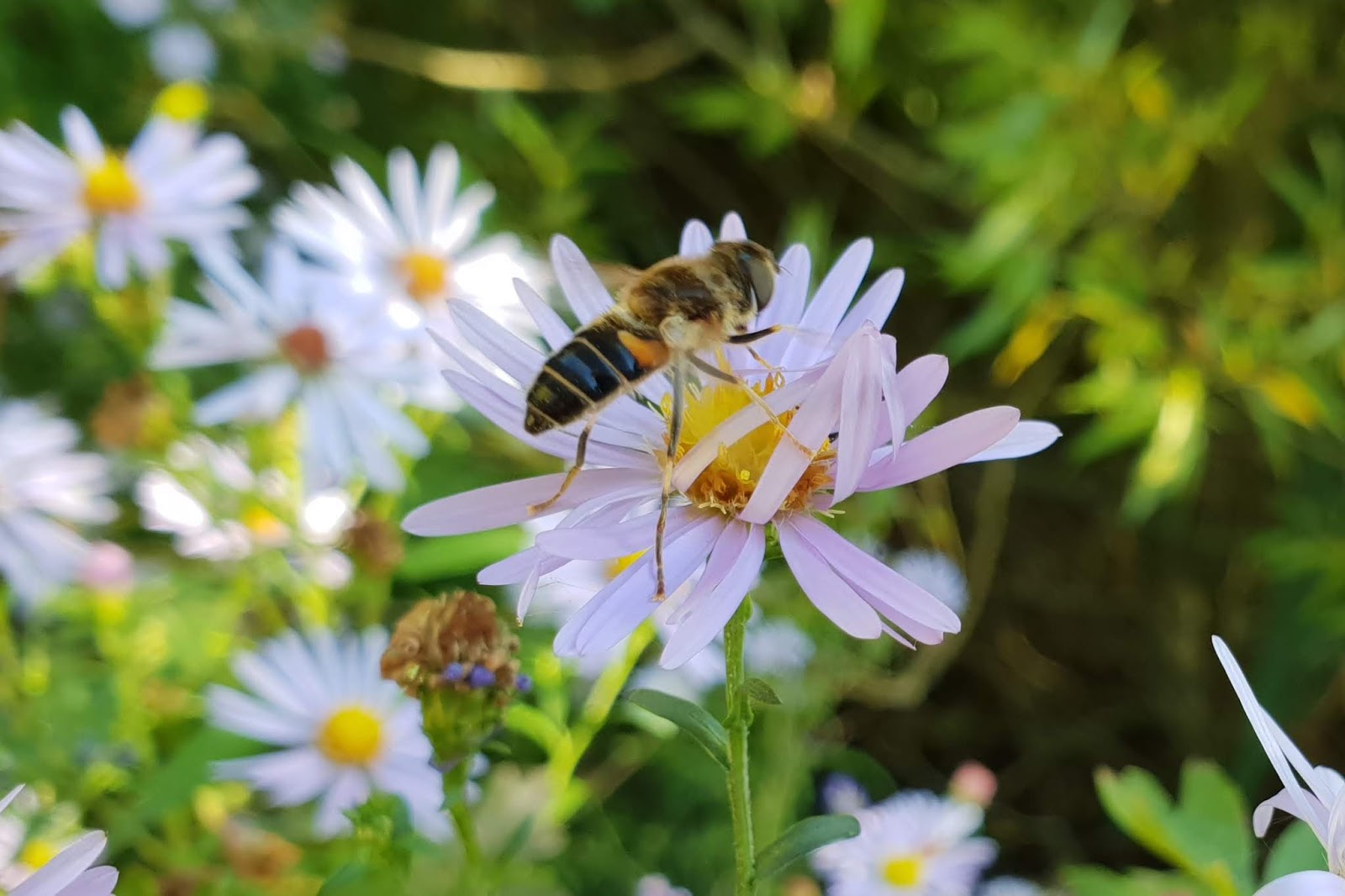
Aster complete with a big fat spiky Tachina
fera, a shiny Neomyia cornicia
and Eristalis tenax, Eristalis pertinax,
Episyrphus balteatus, Syrphus ribesii and Myathropa florea hoverflies.
 |
| Green
Sandpiper |
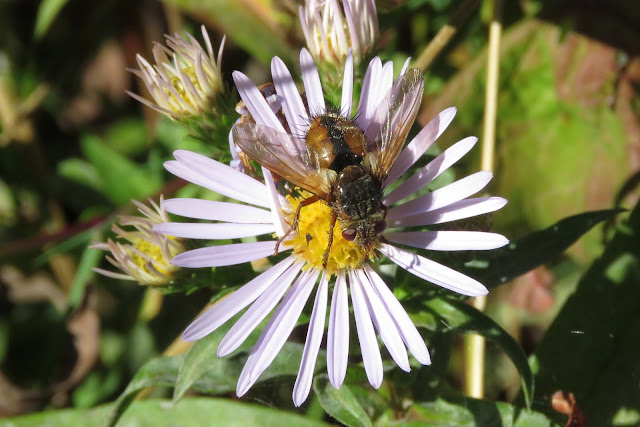 |
| Tachina
fera |
 |
| Neomyia cornicia |
 |
| Eristalis pertinax |
Craster on the Northumbrian coast was our next stop in the
hope that we would once again locate the Willow Tits. The weather had closed in
and it was damp and cool but we completed a circuit of Dunstanburgh Heughs and
got excellent views of at least one or possibly two pairs of these bull headed
rarities.
Chiffchaffs, Coal Tits,
Goldcrests and a solitary Tree Sparrow were picked up and a couple of Eider
bobbed offshore but Berwick was beckoning and we continued on our way.
 |
| Craster Harbour |
We stayed the night once again in the plush Youth Hostel –
it really is superb and ate at the Leaping Salmon having ambled along the banks
of the swiftly flowing Tweed with the last glow of evening illuminating the
river and bridges alike.
 |
| The mixed grill in the Leaping Salmon is to be reckoned with... |
September 28th
A post breakfast stop at Barns Ness was most excellent with
the juvenile Woodchat picked up before we even parked the car as it glowed in a
distant Elder.
No sooner had we set the scope up that it came to say hello
and over the next half and hour performed just for us.
 |
| Woodchat |
Our initial circuit
failed to located the Rose Coloured Starling around the lighthouse with just a
handful of conventional ones see but we did hear a Tree Sparrow and pick up
both Red –throated and Great Northern Divers, Eider, Mergansers, countless
Gannets and a smattering of waders on the rocky shore and offshore.
 |
| Dunlin |
Meadow Pipits, Skylarks, Reed Buntings and Linnets were all
moving although most seemed to be going north-west up the coast which felt a
little odd.
Retracing our steps we found ourselves face to face with the
shrike again and a Redstart flicked into some gorse while up above small skeins
of Pink-feet coasted in what felt like the correct direction.
 |
| Woodchat |
 |
| Pinkies |
 |
| Bass Rock |
A glance behind allowed me to notice that a couple of
hundred of Starlings had descended on the lighthouse so a quick march back and
there it was in all its fawn glory perched almost at the top in the
sunshine. I always find it odd that the
adults always feel bigger than Starling but the youngsters always look
smaller... very odd.
 |
| Rose Coloured Starling and friends |
 |
| Can you see it? |
And so with all targets in the bag we headed onwards to Musselburgh
where the drake American White Winged Scoter was quickly on my now sluggish
life list as it bobbed offshore with 49 equally resplendent Velvets...
 |
| AmWWS on the left! |
 |
| ... and preening |
 |
| Some smart male velvets - I think the AmWWS is the one on the left looking away! |
The light was superb but at times this actually made
distinguishing the colour on the bill difficult to discern from the yellow of
the drake Velvets but with patience the lumpy top of the bill extending well
down the length and patchy red remainder were noted. The eye liner was thicker and more Goth than
the Velvets with less narrowing and angled sweep up and more of an fat Nike
tick from under the eye. Size wise it felt about the same although it swam
differently and when powering along it held its neck stiff and at a 45o
angle out front as if its body was trying to catch it up.
 |
| Andyway - this superb shot by Stuart Gillies does a better job than mine - right bird by the way |
Great Crested and Slavonian Grebes were bobbing around along
with Eider, Shags, Guillemots and Mergansers and with time getting on we just
had long enough to visit the now vegetated pools where I saw the Western
Sandpiper way back in the distant past in August 1997. My third Pec Sand of the
month and two Curlew Sands were duly found along with several Dunlin and Snipe
while another skein of Pinkfeet called overhead.
From here we pushed onto Aberdeen with just long enough to
have a traditional look at Girdleness where the main highlight were the 580
Pinkfeet that came in off the sea high from the north in three wavering flocks.
There is something so evocative about hearing wild gees arriving for the winter
on an autumn day.
 |
| Girdleness |
 |
| The entrance to Aberdeen harbour |
 |
| What can I say...? |
With time pressing we headed for the Hrossey and
the 12 hours of bobbing that would take us safely once more to Shetland.