Another Norfolk weekend beckoned but the double dip Waxwings
of two weeks ago were unusually nagging me so I decided to head up through Suffolk
on a blue sky morning and the traffic was light although getting stuck in a convoy
behind a big tractor for 11 miles on the narrow wiggly stretch of the A12 was
somewhat tedious. I escaped the ever
increasing snake of cars and headed down to Reydon where I thankfully only had
to wait a few minutes for the quartet of Waxwings to return to their favourite
tree.
I was not fussed about seeing then down low and enjoyed the
treetop views as all four spent most of their time flycatching after insects
only they could see, showing off those wing bars and yellow tail tips in all
their glory in the sunshine.
Waxwing
I left the little housing estate after half hour
and continued northwards(ish) to find the Waverley Forest viewpoint near
Fritton in the hope of connecting with the White-tailed Eagle.
It was a pleasant drive with the odd Buzzard and Red Kite
and few winter Thrushes too and I soon found my self at the end of a rough lane
with a walk through the Birches and Pines to get to the spot.Coal Tits and Goldcrests called but I did not
hear any hoped for Woodlarks in the clearings. After saying good morning to
Worzel Gummidge (it really was him!) at his cottage I found myself overlooking
the vast expanse of The Broads grazing fields between the Waveney and Yare to
the Acle Straight and even beyond.
Great White Egret in landscape shot!
Two photographers has seen the Eagle distantly but had lost
it and it never reappeared in the time I spent there but there was still plenty
to see with a host of raptors constantly on view with best part of 20 Marsh
Harrier, ringtail Hen Harrier, six Buzzard, Red Kite and nine Kestrel.The fact that none of these birds discovered
the Eagle on the deck convinced me of its absence.
Distant skeins of Pinkfeet moved around along with flights
of Wigeon, Lapwing, GoldenPlover and Curlew and four Great White Egrets occasionally
appeared from the ditches with serpentine necks.Chinese Water Deer dotted the view.The north wind was picking up and became
quite biting so I ambled back for some lunch and the wiggly drive onwards to
Filby Broad.
It was not breezy this time but the light was awkward to say
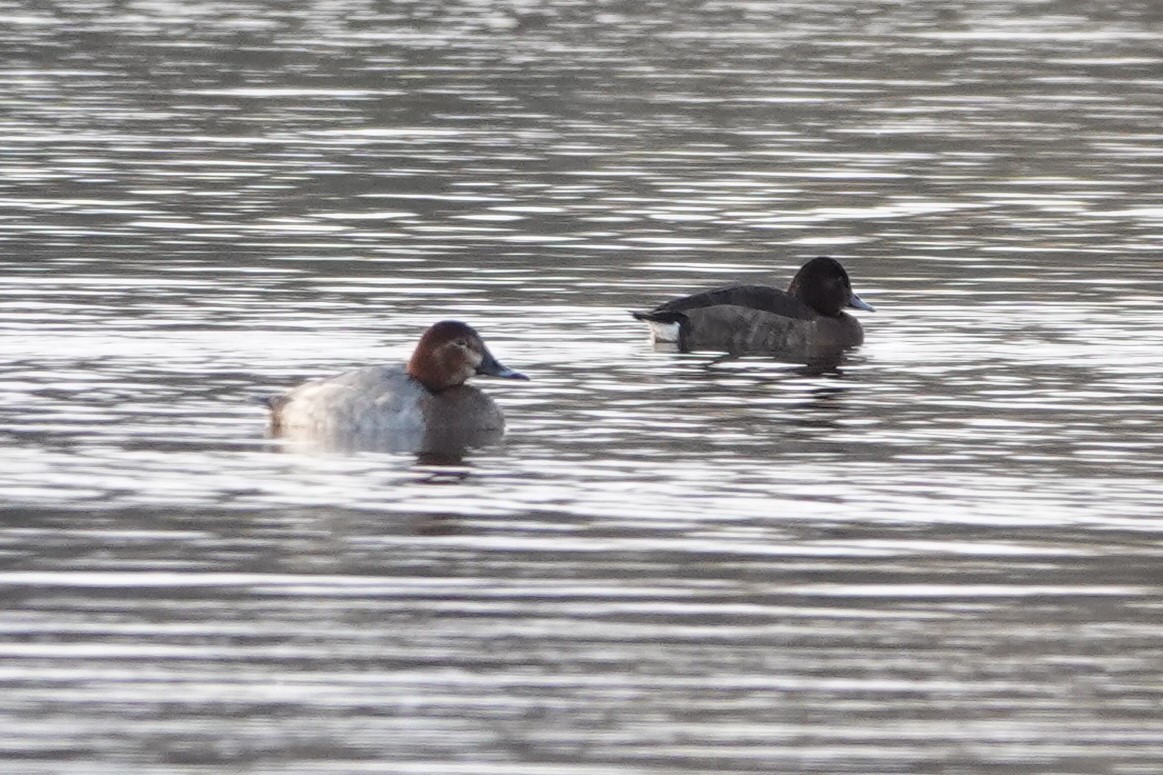
the least.I saw two distant Ferruginous
Ducks, a female Scaup and what I presumed to be a male type hybrid but they were
all a long way off. The Goldeneye were entertaining once again though.Marsh Tit,Goldcrest and a flock of Redwings
were encountered walking to and from the car.
Eight minutes round the block to Rollesby where a better angle
could be gained.I found a female
Ferruginous Duck with the Pochards although I have a nagging doubt now that
that too may have been a hybrid.There
was no Ring-necked Ducks to be seen once again but I was please to find a
female Smew and two male Mandarins. One of the male Goldeneye put on a magnificent close display for me.
1w female Ferruginous Duck and female Pochard
1w female Ferruginous Duck and two male Tufted Ducks
male Goldeneye
male Goldeneye
male Goldeneye
male Goldeneye - the face spot in unusually large and irregular and the actual bill felt deeper than normal too.
It was almost school run time and I was cold so I called it
a day and wended my way to Enid’s at Wymondham.
As my day out in Kent had no takers by Monday, Pat decided
that I should be taken out for the day (subsequently sorry Sally!) and so I met
him at his abode in Woodford at 6am yesterday for a North Norfolk
excursion. The weather driving up was dire with almost freezing fog all
of the way and we thankful to arrive at Holkham being able to see the trees in
the distance!
With the slow journey up we were a little late for the full
goose spectacle but there were still hundreds of Pinkfeet heading east and inland from the
direction of Wells.A vast flock of
Wigeon were grazing alongside Lady Ann’s Drive and Snipe were foraging in the
wet meadows and actually approaching quite close to where we parked where the
would duck down in the grass at the slightest suggestion of trouble which was frequently
provided by the marauding Red Kites and Marsh Harriers.
Pinkfeet
Could-be-any-colour-feet
Legless Snipe
It was a monochrome landscape and even the Great White
Egret that lumbered over the road barely cut through the gloom with its usual
gleaming brilliance.
Grim White Egret
We geared up with as many layers as possible and headed
through the Gap to the beach passing Goldcrests and Coal Tits in the pines on
the way.The tide was still well in and
an elevated scan only produced a few Black-tailed Godwits, a single Brent Goose
and a couple of Redshank so we followed the Bay east towards the ‘compound’
where the Shorelarks are regularly to be found.There were Rock and Meadow Pipits, Skylarks and a small Linnet flock on
the saltings and it did not take long to find the three little yellow lark
faces grovelling in the sandy areas.It
has been a while since I have seen this delightful species.
Notsurelark
We left a tour group watching them and headed for the sea where
the dunes afforded some shelter from the chilling breeze that had got up. The sea was calm but almost devoid of birds
despite visibility up to about half a mile out.
A dozen spiky headed Mergansers were found along with a single
Red-throated Diver and a just one Grebe but to our delight it was a dusky
fronted Red-necked.Sanderling scurried
along the foreshore like clockwork automatons and Oystercatcher and Grey Plover
were also seen.
Retracing our steps around the Bay saw us bump into another
party of Shorelarks on the east side.We
had been told there were seven but 13 were counted on several occasions.These ones showed even better as they shuffled
on almost invisible legs.We had
collected six other people (none of whom had seen the species before) and by
standing still we all got some memorable views.Every now and then they would take off with the Skylarks and Linnets but
would separate off and the thin calls could clearly be heard.They would soon return to roughly the same
spot and recommence stocking up on seeds.
Shorelarks
Shorelarks - five in this shot!
The sea beckoned again but had receded some way so our impromptu
party walked most of the way down.It
looked busier but closer inspection revealed that the duck rafts were not
Scoter but Wigeon and Teal!In fact I only
saw one female Scoter!There were other
birds through with about another dozen Mergansers, a first-winter male Eider,
Red-throated Diver, two Great Crested Grebes and surprisingly two more
Red-necked Grebes.Of the Snow Buntings
there was no sign.
There had been some beach galloping
Walking straight back at the pines took us to the hide but
the freshmarsh was scarily devoid of birds.I had read tweets from two weeks ago off 13000 Lapwing along with vast
numbers of wildfowl.We saw three
Lapwings and a few Greylags and Egyptian Geese and even the 200 Russian
White-fronts were not visible so we ambled back passing a fine Red Kite with a
fresh Rabbit kill and several more Marsh Harriers and Buzzards but not the
hoped for White-tailed Eagle which had buggered off to the Broads.
There were very few small birds in the wood with only Treecreeper
of note although the Firecrest was calling in the huge Holm Oak by the visitors
centre and Pat actually had a good view in my absence. Six Grey Partridge were in their regular spot
in the corner of the first field and the same raptor selection were still
giving the wildfowl serious grief out on the marsh towards Wells. There was still very little light and I was dithering
about what to do so we went west and had a look out over the freshmarsh from
the Burnham layby. There was almost
nothing at all bar the raptor trio again, a Great White Egret and some
Red-legged Partridges. There were no
Brents or Pinkfeet let along the hoped for Russian White-fronts. Fortunately a brief stop at one of the
Holkham gates gave us 20 of the latter complete with belly bars and facial
blazes.
Vaguely Reddish Kite
Wigeon
Very-Grey Partridges of the headless subspecies
Red-legged Partridges
East again to Cley (ignoring some strange ‘road closed’
signage) and parking up at the East Bank in light rain. The Serpentine was
frozen with a film of water on top but there were only Wigeon in the fields and
not waders at all as we walked down while Arnolds Marsh added Avocet, Little
Egret and Pintail to the day tally but there were only five Black-tailed
Godwits and no sign of the Dowitcher.
The rain was light but painfully icy and a few minutes at the sea
produced a single Great Crested Grebe and not one other bird.It was all getting a little dispiriting but
thankfully a blizzard of Snow Buntings warmed our hearts as they drifted around
us in a flock of rippling, flickering black, white and brown.The disappeared almost completely into the
shingle and we were able to scan them for the Lapland Bunting but a Goldfinch
was the only waif amongst them.My pictures
tell me that there were at least 72 so my use of the word blizzard was appropriate
for the first time in many years.
Snow Buntings - 23 in this pic and the Goldfinch
Snow Buntings
Snow Buntings
The rain was getting heavier so we about turned and trudged
back with a lovely Kingfisher and ice skating Water Rail for our troubles.I am not sure I have experienced such a grey
bitterly cold colourless day before.
Garden Drove to wait for the Pallid Harrier had been the
intention but the idea of walking down the muddy track, standing around and
then trying to walk back in the near dark really did not appeal so we opted for
the lazy option of Stiffkey campsite car park which at least meant we could
retreat if the heavens opened and we spent the next 90 minutes scanning the
murky saltmarsh and distance sandflats.We did quite well all things considered with a female Hen Harrier close
over the marsh heading west, two Marsh Harriers, Red Kite, female Merlin and
distant female Peregrine along with a ghostly Barn Owl.
The Pallid may well have snuck by us but it was
hard work and tough on the eyes in such poor light.Little Egrets were dotted across the area and
seemed in no hurry to head off to roost while out on the sandflats skein after
skein of Pinkfeet dropped in and settled down for the night.This is the first time I have ever seen them
do this and despite the great range you could still hear them ‘winking’ while a
good mile to the west the Dark-bellied Brent geese were massing similarly and were
noisily grumbling.There were parties of
these all around too and you could see the white bums winking on and off as
they waddled around.
A Roe Deer appeared way out on the sand and ran like a demented dog through the entire flock of Pinkfeet which quickly settled after it popped out the other end. Quite what it was doing way out there is anyone's guess. Three Muntjac popped up under our noses too as they worked their way through the Sueda.
Curlews drifted back from the inland field where they had
been feeding and were very vocal and a Song Thrush started singing behind us as
the day came to a close but sunset came and
went with no visible change in the light quality and it was the lack of feeling
in fingers and toes than finally persuaded us to call it a day before similarly
wet and grim journey home.
Sunday saw me down at Dungeness for one of my Kids Wildlife Club walks and I arrived early in the hope of catching the Bewick’s Swans leaving
the ARC and heading out to Wallend. Getting there before eight was not early enough
and they had already departed but as I walked down to the Hanson Hide I picked
up the three Glossy Ibises as they went for a short fly round and could then
hear Whooper Swans. This was a bit of a
bonus as they had been frequenting the far end of the pit but these five adults
chose my arrival to have a fly round and plonk themselves right out in front of
the hide with the three Ibis tucked into the edge out to my left.
Whooper Swans
Glossy Ibises
I spent the next hour watching both sets of marvellous birds
as they respectively went about their morning ablutions.I messaged Orsi and said that I would keep
tabs on them all for Max who was particularly keen to see the Ibis.
The pit was actually pretty quiet with just one male
Goldeneye amongst the scattering of diving and dabbling duck.There are no scarce grebes, divers or
sawbills anywhere around Dungeness at the moment and winter birding in the
south-east feels like it is further waning as a variety of species wisely chose
not to cross the North Sea and now spend the winter in a now less cold middle
Europe.
Marsh Harriers were constantly on patrol and were in fact
very vocal and kept descending into the reed bed opposite. Four birds were
involved but I could not discern what exactly they were up to.One of the males dislodged a Bittern briefly
which popped above the surface for a couple of seconds.
The Whoopers were getting restless and also became vocal
before deciding it was time to head off for breakfast and all five powerfully
took off with much foot pattering and purposefully headed towards Lydd and presumably
their Bewick companions.
I walked back to the car hearing Bearded Tits and following
a mixed flock that contained Blue, Great and Long-tailed Tits, Chiffchaff and
four fluffed up little Goldcrests.Two
Cetti’s Warblers called along with similarly invisible Water Rails and a female
Merlin rocketed through in pursuit of a solitary Starling.
Goldcrest
Goldcrest
I could only hope that the rest of the day would live up to
my expectations when Max, Orsi and Tom arrived.I had a cup of coffee and kept an eye back on the pit preying that the
Ibis stayed put. They did not and soon appeared and flew in their prehistoric,
gangly manner off towards the horse paddock just up the road.
Glossy Ibis
A message said ‘be there in 8 minutes!’ – how frustrating!I grabbed my gear and walked up to the first
layby to scan the distant paddock (the road is just too dangerous to walk along)
but all I could see were six Cattle Egrets and seven Little Egrets (who would
of thought I could use such a disparaging term about a flock of UK Egrets!).
I was soon scooped up by the family (showing Max a roadside
Great White Egret in the process) and we popped down to the entrance by the
flooded paddocks for a closer look and although the Egrets were wonderful and a
Buzzard was perched on the fence it was distinctly lacking in Ibis.
Great White Egret
Cattle Egrets
As such we headed
straight down towards the fishing boats where I was plied with Choc au Pain in
the hope of finding young Max his first Caspian Gull. We trudged across the shingle to the sea.There was a very cool breeze and digits were
quickly numbed but within just a couple of minutes I had picked up a smart
first winter patrolling the shoreline which pleased him no end.A similar plumaged Yellow-legged Gull quickly
became new bird number two for the morning.Two 2w Med Gulls dipped around the bent fishing rods of hopeful anglers
and further out there were Kittiwakes to keep the gull theme going.
The sea was very choppy which precluded watching anything on
the sea but there were line of elliptical Razorbills whizzing back and forth with
the odd Guillemot amongst then while Great Crested Grebes and Red-throated
Divers did likewise a little higher up.Way out there was a vast congregation of Gannets and thankfully some
funnelled in closer and performed some full on mass diving for us all to
watch.Orsi was particularly taken by
them.
Gannets
Fourteen Turnstone were sheltering on the beach and would
often hunker down and completely disappear amongst the stones and shells which
led us to engage in a bit of beachcombing. There were large Cockles, Slipper Limpets,
Scallops, Netted Whelks and Dog Whelks along with the carapaces of variously
sized Spider Crabs, Cuttlefish internal shells, a small piece of Sponge, Dog
Whelk eggs cases and a multitude of spent Ray egg cases that I have yet to identify.Once I have done so they will submitted to
the Great Eggcase Hunt for the Sharks Trust.I showed Max the first one and he then went off and came back with about
a dozen.
Turnstone
Ray & Skate egg cases - will update soon!
Sponge
Dog Whelk & egg case
Translucent shell
The cold was getting to us all so we cut back to the car and
then made our way down to the reserve for a warm up inside while watching the
Shoveler and Teal just outside.The drakes
of the former were gleaming in the sunshine and some of the normally green
heads were actually looking rich purple. Max found a drake Goldeneye from the
Dennis Hide and there were some gloriously coloured Greenfinches on the feeders
in the car park.
Greenfinches
Another check on Cooks Pool once again failed to produce the
missing Ibis with just some Curlew, CanadaGeese, a swirl of Golden Plovers and a mass of Coots although we did
get another Great White Egret and out first Marsh Harriers, Kestrel and Stonechats
of the day.
Stonechat
Stonechat
I opted for a drive out to look for the wild swan flock before
lunch and after wiggling through Lydd we found our way to Hawthorn Corner where
a large herd could be seen way out in the fields.The scope ate up the distance and Max had his
third new bird of the day with 58 happily grazing Bewick’s Swans.It was good to see so many youngsters amongst
the herd and even better when I realised that the five Whooper Swans were also
out there and feeding just away from their smaller cousins. Golden Plovers and
Lapwings were dotted with smaller gulls around the very damp fields with
probing Rooks and gangs of Jackdaws.
Lunch was taken in the ARC car park before a brief look from
the hide.It was colder inside than out
but there were no Ibis to keep us in there for long and the walk back added
Chiffchaff and Water Rails to their day tally.
Chiffchaff
We drove back over the road and checked Cooks Pool once again and I
suddenly spotted the trio of pesky GlossyIbis dropping in to the paddocks behind the
farm and thankfully Max saw them briefly and so we made our way back to my layby,
assuming that they would be lurking in the hidden channels further back but we
could not see them. Thankfully Tom bothered to look at the favoured spot on the
other side of the road and there they were so we scooted quickly down the road
resulting a very happy family with their first look at this enigmatic
species.The sun was still out and they
actually gleamed with petrol sheens across their wings.The Cattle Egrets were still following the
ponies around and two Egyptian Geese warily watched us.
GlossyIbises
Cattle Egret
With his prime target under the belt and his fourth new bird
I opted for a drive around to Springfield Bridge with the light behind us.There were Wigeons and Teal alongside the
dykes and Mute Swans in the fields while a female Merlin was perched up near
the reeds on Dengemarsh which was great little bonus. A Meadow Pipit and Reed
Bunting flew over and our closest Great White Egret lumbered up in front giving
cracking views.
Wren
Great White Egret
There was still time for one more stop that could add a few
more to the day list so we headed west to Scotney Pit passing the desired
Barnacle Geese on the way and although there were no different ducks we did
somehow add more waders with Redshank, Dunlin, RingedPlover and two Green Sandpipers
around the uninviting margins.
With energy reserves waning and the supply of French pastries running low, we called it day and I suspect
that young Max was either grinning or sleeping (or both) all the way home.