After a very long weekend at work that comprised a superb
Insect Day till late afternoon on Saturday leading straight into the Big Wild
Sleep Out all nighter through to late morning yesterday, the last thing I
expected to be doing today was hauling my aching body out of bed before 3am to
cadge a lift to Suffolk to have a pop at seeing the Western Purple Gallinule
that had materialised on the South Hide ‘Albatross Pool’ at RSPB Minsmere.
By 5.30 we were on site in an almost empty car park which I
found a little bizarre and it was a beautiful morning with blue skies, warm sun
and no wind. A quick yomp through the woods and within the a whole ten seconds
of getting there this enormous purpley-blue chicken had ambled into view
briefly in the closest reaches of the reedy pool.
Over the next hour a couple more views were had with a good look
at those preposterously long red legs and toes, white fluffy undertail and
immense red bill. Given the amount of trouble I had had seeing these in La
Janda in 2014 when a couple of poking heads out of the rice paddies was all I
got for my troubles, I was very pleased indeed.
Then much to our delight it flew across the whole width of
the pool on big rounded wings with those legs dangling down (tempted to put ‘in
a sinister fashion’). We all moved to the left and within ten minutes it flew
back again and this time spent the next 15 minutes slowly working its way along
the back edge just skirting in and out of cover to collect the most succulent
reed shoots which it snipped off with its red secateurs and transferred to its
very dextrous foot before extracting the pith.
 |
| They are not great but you more than get the idea! |
And if you click here I have uploaded a little video... put it on mute though. Just watch it use that bill and legs!
There was plenty else to see on the pool with eight Little
Egrets including some youngsters, hunting for tiddlers while Water Rails and a
family of Moorhen fed in the edges. Warblers were all around and Bearded Tits
came down to drink and look for seed. A male Marsh Harrier lounged in a Willow and a flock of
Black-tailed Godwits ‘snickered’ as they flew overhead with pied wings glowing
from beneath in the blue.
We carried on round passing the smart clumps of Marsh Mallow
(Max and Annie... remember Mr Staypuft and the Marshmallow Police?!) before hitting the Sluice and Beach.
A young Wheatear was using a Tank Trap as a perch and a solitary Ringed Plover
called ‘pluuip’ from the shingle.
Stonechats, Linnets and Reed Buntings were disturbed as we made our way
along and a few insects distracted me for other avian pursuits.
 |
| Marsh Mallow |
 |
| Young Wheatear |
Graylings were path perching in front of us and a couple of
smart Common Blues were found along with a newly emerged Migrant Hawker.
 |
| Grayling |
 |
| Migrant Hawker |
 |
| Migrant Hawker |
 |
| Common Blue |
 |
| Common Blue |
The Ragwort was attracting quite a few bees including a
heavily laden Pantaloon Bee (Dasypoda hirtirpes) and several tiny Red-tailed
bumbles. Eristalis tenax and nemorum were seen along with quite a few
Eristalinus aeneus – with only the top half of the eyes being hairy!
 |
| Eristalinus aeneus |
 |
| Helophilus pendulus - I also saw H. hybridus |
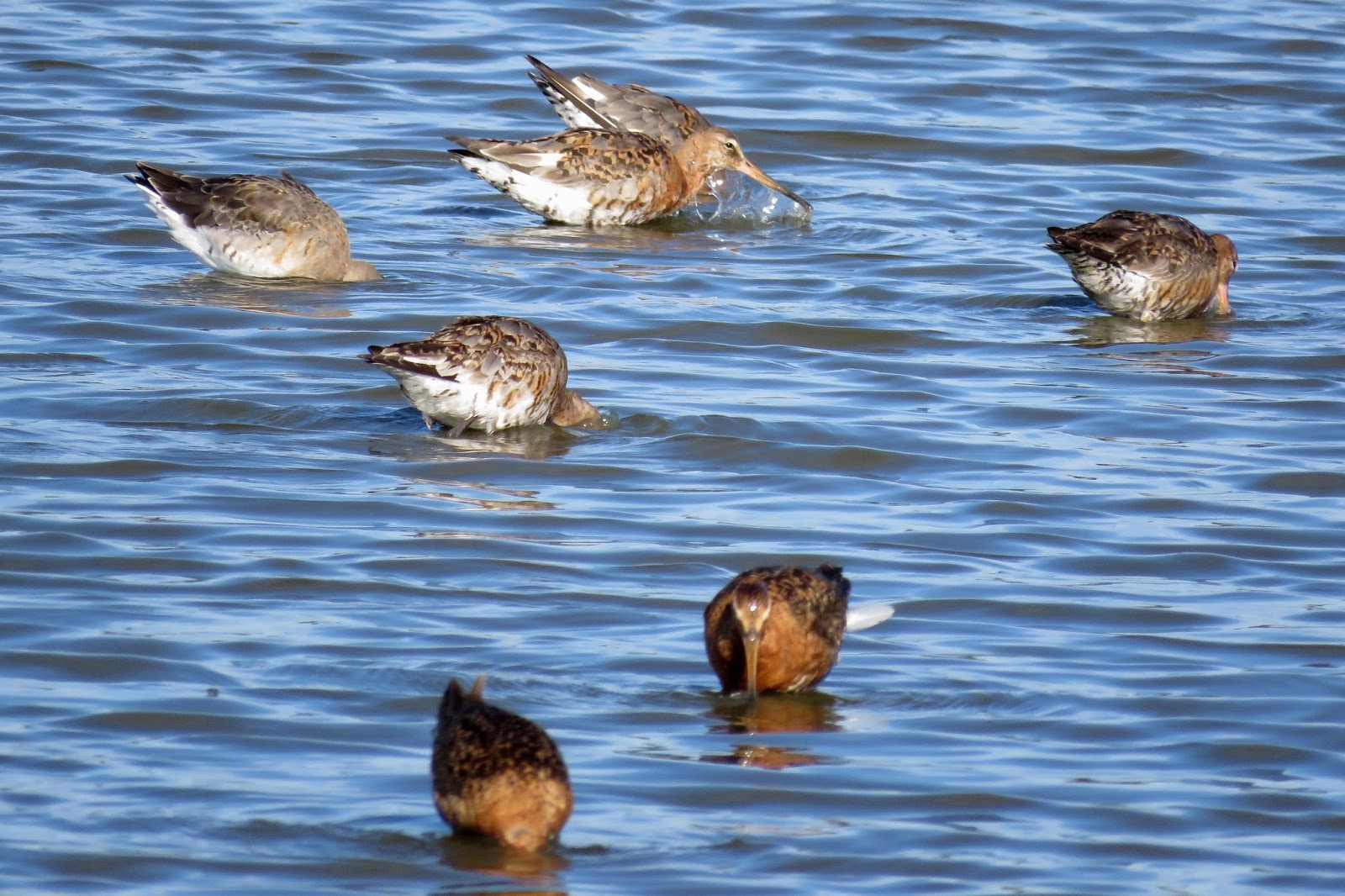
East Hide provided good views of large numbers of moulting
Black-tailed and a single Bar-tailed Godwit along with 26 Spotted Redshanks,
Greenshank, Ruff, 27 Dunlin, LRP and both Common and Green Sandpiper. There was
no sign of the Caspian Tern seen yesterday.
North Wall was quiet and a breeze was developing but there
were some nice Six Spot Burnets but of the Stone Curlews there was no evidence
although two Common Curlews stood in pretty well in their stead.
 |
| Black-tailed Godwit |
 |
| Black-tailed Godwits |
 |
| Blackwits and the Barwit |
 |
| Black-tailed Godwit, Dunlin & Avocet |
 |
| Six Spot Burnet |
Next it was time for the Bee Wolves and they did not
disappoint as they started their day by clearing burrow entrances and bringing
in fresh paralysed Honey Bees. Scattered amongst them were more Pantaloon Bees
and their chambers. I presume that they Wolves are not interested in this
otherwise suicidal behaviour.
 |
Bee Wolf -
Philanthus triangulum
|
 |
Bee Wolf -
Philanthus triangulum with Honey Bee stowed away for travel!
|
A cup of coffee and then some quality butterfly time around
the centre budhlias with literally dozens of Red Admirals and Peacocks and a
handful of Painted Ladies and even Graylings that seemed particularly
attracted to my blue checked shirt!
 |
| Peacock |
 |
| Peacock |
 |
| Red Admiral |
 |
| Red Admiral |
 |
| Painted Lady |
 |
| Painted Lady |
 |
| Grayling |
A single Silver Washed Fritillary entertained at close range
and Gatekeeper, three Whites, Meadow Brown, Small Skipper and a very tatty White
Admiral made for a fine show. Add to this
my first Common Darters of the year, a couple of feisty Southern Hawkers,
bumblebees and a plump Volucella pellucens hoverfly and it was a warm and
heavenly scented insect haven.
 |
| Silver Washed Fritillary |
 |
| Silver Washed Fritillary |
 |
| Silver Washed Fritillary |
 |
| Silver Washed Fritillary |
 |
| Volucella pellucens |
 |
| Common Darter that landed on Mark's hand... |
 |
Southern Hawker
|
 |
| Southern Hawker |
A quick look at the many Ant Lion pits around the centre and
then we poodled off for an hours on Westleton before coming home. Birdwise it
was almost devoid but we did find a brood of Dartford Warblers in the end.
Graylings were everywhere and Comma and Large Skipper were added to the list
along with Mottled and Common Green Grasshoppers.
 |
| Ant Lion pits |
 |
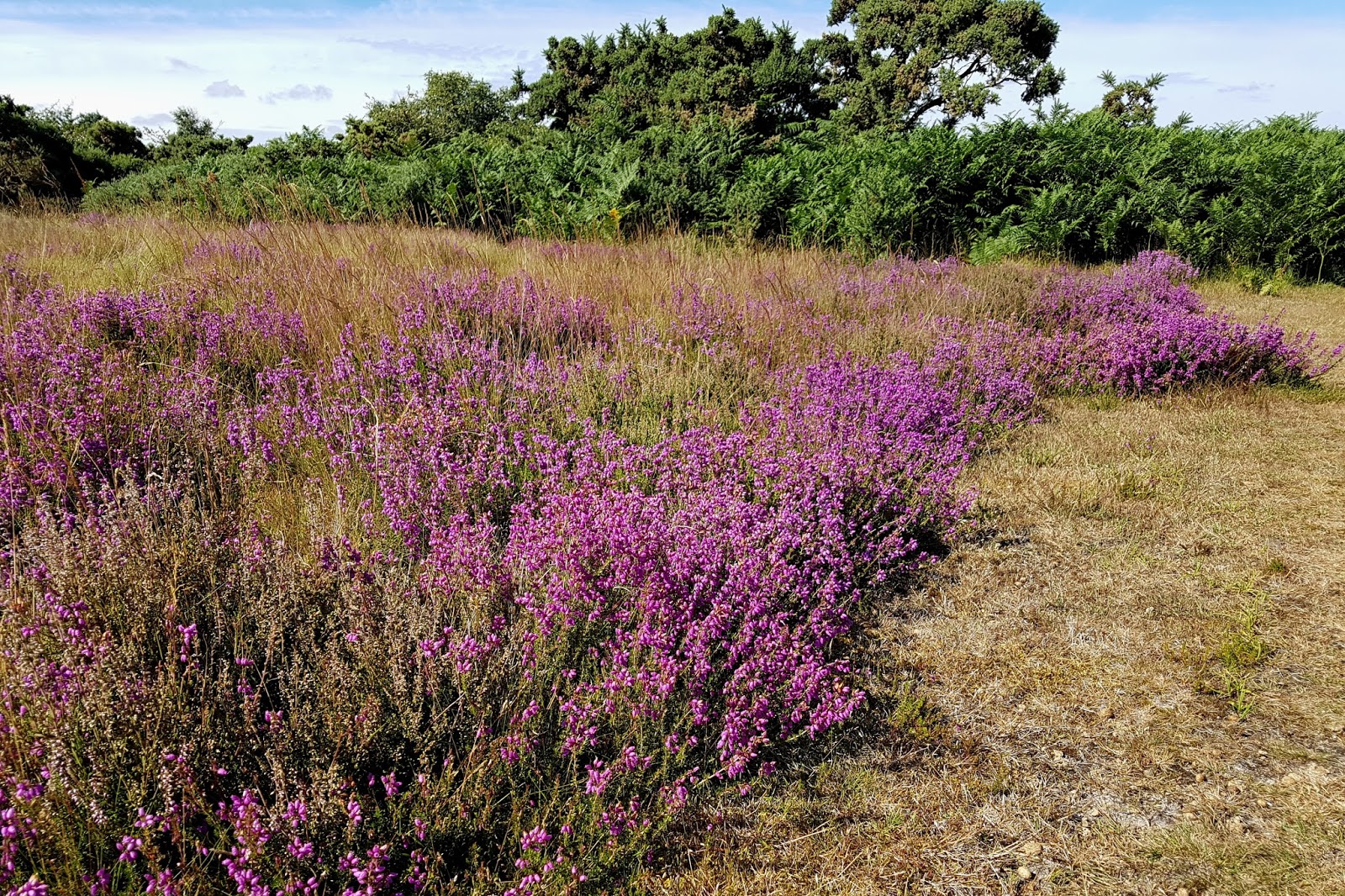
| Stunning Heather - no Tachina grossas :o( |
 |
| Small Copper ovipositing |
 |
| Small Copper ovipositing |
 |
| Mottled Grasshopper |
Ruth and Mark had jobs to do back home including picking up
chicken food on the way back so we made a move and to be honest I was running
out of steam once again after a great morning out and perhaps the kick start to
me autumn that I needed.
1-8-16