It has been an interesting couple of weeks at work at RSPB
Rainham Marshes with a host of events, sightings and gatherings that has left
scant time for free thought let alone anything else (bar a brief Blue Chicken
Run).
The 30th July saw us tackle the marsh itself for Big Wild
Sleep Out and somehow we managed to keep 62 guests entertained throughout the
evening and through to the following morning with nocturnal pond dipping, an
obliging Barn Owl, the International Space Station hurtling twice overhead and some
great mothing that included a Poplar Hawkmoth and a couple of beautiful Garden
Tigers.
 |
| Cracking Garden Tiger in full 'bugger off' mode |
It was then one week to go for Hen Harrier Day but even with
all the preparations for this great rally we still managed to catch and confirm
id on another of those interesting orange bodied horseflies. As such we have
now added the nationally scarce Hybomitra ciureai – Levels Yellow Horned
Horsefly to the site list. Both so far have been females so I was very pleased
today to discover our first male and unlike the others it was actually outside
the building and not on it!
 |
| Female Hybomitra ciureai – Levels Yellow Horned
Hosrefly |
 |
Male Hybomitra ciureai – Levels Yellow Horned
Hosrefly -
from today |
And so the 6th August arrived... Hen Harrier Day
An early start saw the team setting up the final few
banners, signs, car park and enormous tin foil Hen Harrier before opening the
doors to the public at 8am.
By 9.30am the vibe was amazing and the area in and around
the visitors centre was a hubbub of chatter, laughter and some sombre faces as
the distressing facts about the plight of our Hen Harriers was discussed. Our
four speakers were mingling among the throng with Mark Avery,
(scientist/naturalist & former RSPB Conservation Director), Charlie Moores,
(co-founder of Birders Against Wildlife Crime), Dr Mike Clarke, (RSPB CEO) and
Chris Packham (naturalist and BBC Springwatch presenter) all chatting with the
other attendees. In the centre the last of the placards and my Hen Harriers
on a stick were handed out and coffee and cake was being consumed in
preparation for the rally to come.
 |
| Chris & Henry |
We mustered the troops at 1030am and headed down toward the
Marquee Field beyond MDZ. It was a sea of waving harriers, with t-shirts and
homemade banners amongst the procession as we headed along the trail where we
were serenaded movingly en route by Peregrina EnChantica.
The crowd started to collect in the field and I was
repeatedly being asked how I had booked such a lovely day and a very short time
before we started the answer literally appeared when Graham White and Alistair
Wilcock found a Red-chested Sunbird - Cinnyris erythrocercus - (basically the African, Asian Hummingbird
equivalent) as it flew overhead and perched up on the river wall bushes. It
would appear that one had been seen in a Chingford garden in recent weeks and
with being shiny blue-black with orangey red breast seems to tie in with our
bird but whichever way you look at it, the escape from a private collection was
certainly the most aptly named of birds to oversee our wondrous gathering.
 |
| Sunbird on the river wall - Alasdair Wilcock |
 |
| And the likely culprit Red-chested Sunbird - Cinnyris erythrocercus taken by Paul Scott in a Chingford garden in recent weeks |
What followed were four of the most impassioned, emotive
speeches I have heard on the horror afflicting our uplands – and do remember
that it is not just Hen Harriers that are being persecuted – any predator and
even Mountain Hares are targeted for removal and the environmental effects are
catastrophic on both local and global levels. This was joined up thinking
with a definite goal.
 |
| Chris, Mark, Mike & Charlie |
By the time Chris Packham wrapped up proceedings our spirits
were raised with a glimmer of hope that things would change; that we had got
the grouse community rattled and that people were starting to take notice.
The 534 people sweltering in the sunshine began to disperse
and amble back while the female Marsh Harrier and one of her youngsters tumbled
in their own mock Skydance overhead.
Book signings, ice-creams, cold non-alcoholic beer (thanks
Louis and Gosia) and much chatting and mingling followed on what was surely the
most rewarding day any of us as staff or volunteers had ever had on the reserve.
Let’s hope it makes a difference...
 |
| According to certain 'authorities' it was a very poor turn out....mmm... |
And so we get to Monday 8th with a skeleton crew and some still
pretty zombied people in attendance but we muddled through helped by Clive showing
me an image of a Hawker not far from the building that had me scurrying back
with him to discover what I hoped would be there... a fine Lesser Emperor. This
is the third or fourth for the site but the first ever to sit still and pose
for the cameras.
 |
| Lesser Emperor |
This morning dawned bright and clear and it was actually a
little chilly as I set out at 0730 to look for yesterdays rare Odenata. Little Egrets were chasing tiddlers across
the ever reducing waters of Purfleet Scrape and I counted 44 in the shallows. A
Greenshank was likewise running about with its bill scything through the
surface.
 |
| Greenshank |
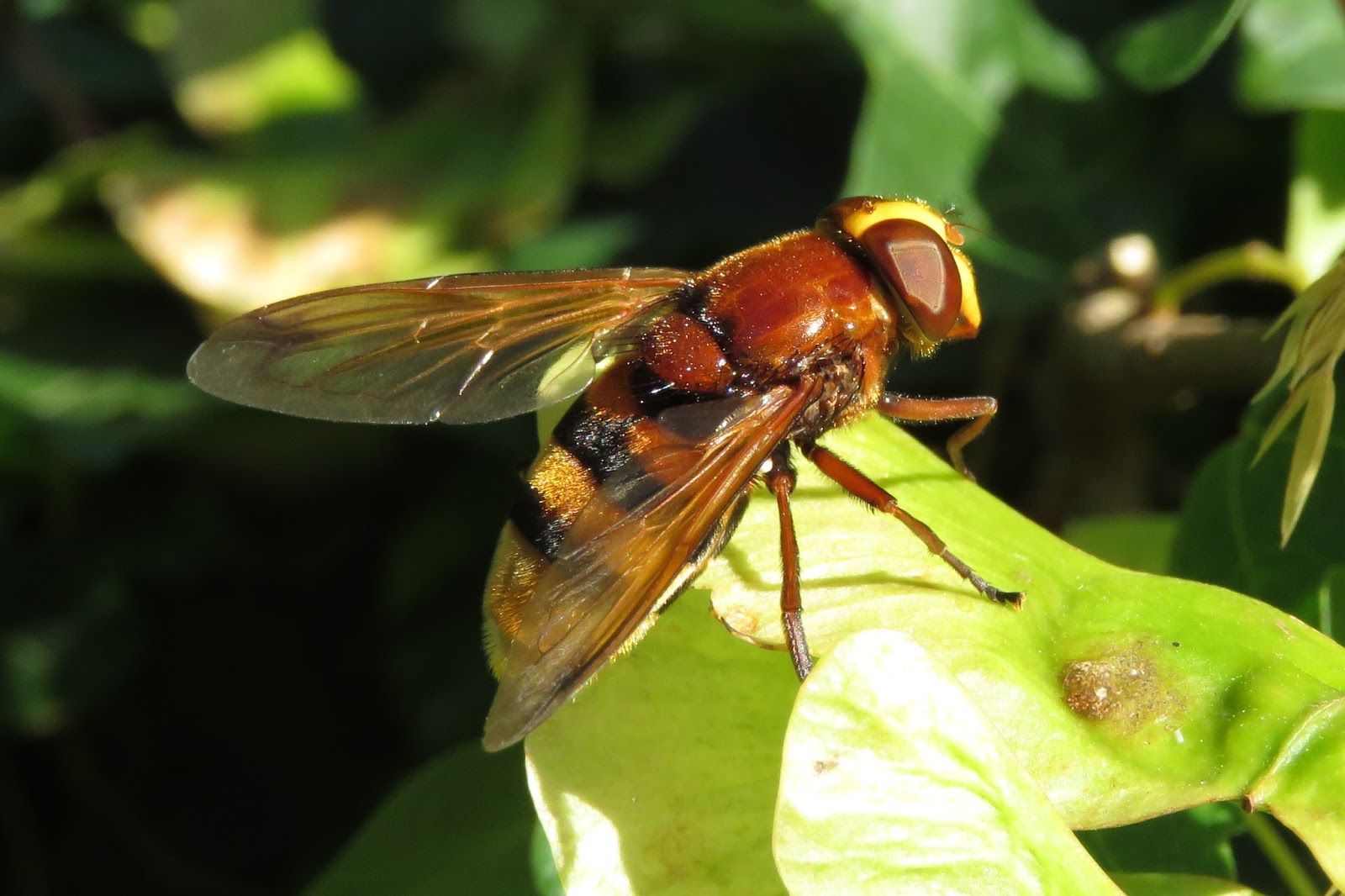
I spent the next 90 minutes basically Hoverating down and
around the woodland where I picked up a pretty good range of hoverfly species
most of which I was happy to identify... Picture splurge to follow.
 |
| The furry Myathropa florea |
 |
| Syrphus ribesii |
 |
| Volucella inanis |
 |
| Volucella zonaria |
 |
| Volucella zonaria |
 |
| Dasysyphus albostriatus |
 |
| Dasysyphus albostriatus |
 |
| Eristalis arbostorum |
 |
| Eristalis arbostorum |
 |
| Episyrphus balteatus |
 |
| Eristalis intricaria |
 |
| Helophilus pendulus |
 |
| Helophilus pendulus |
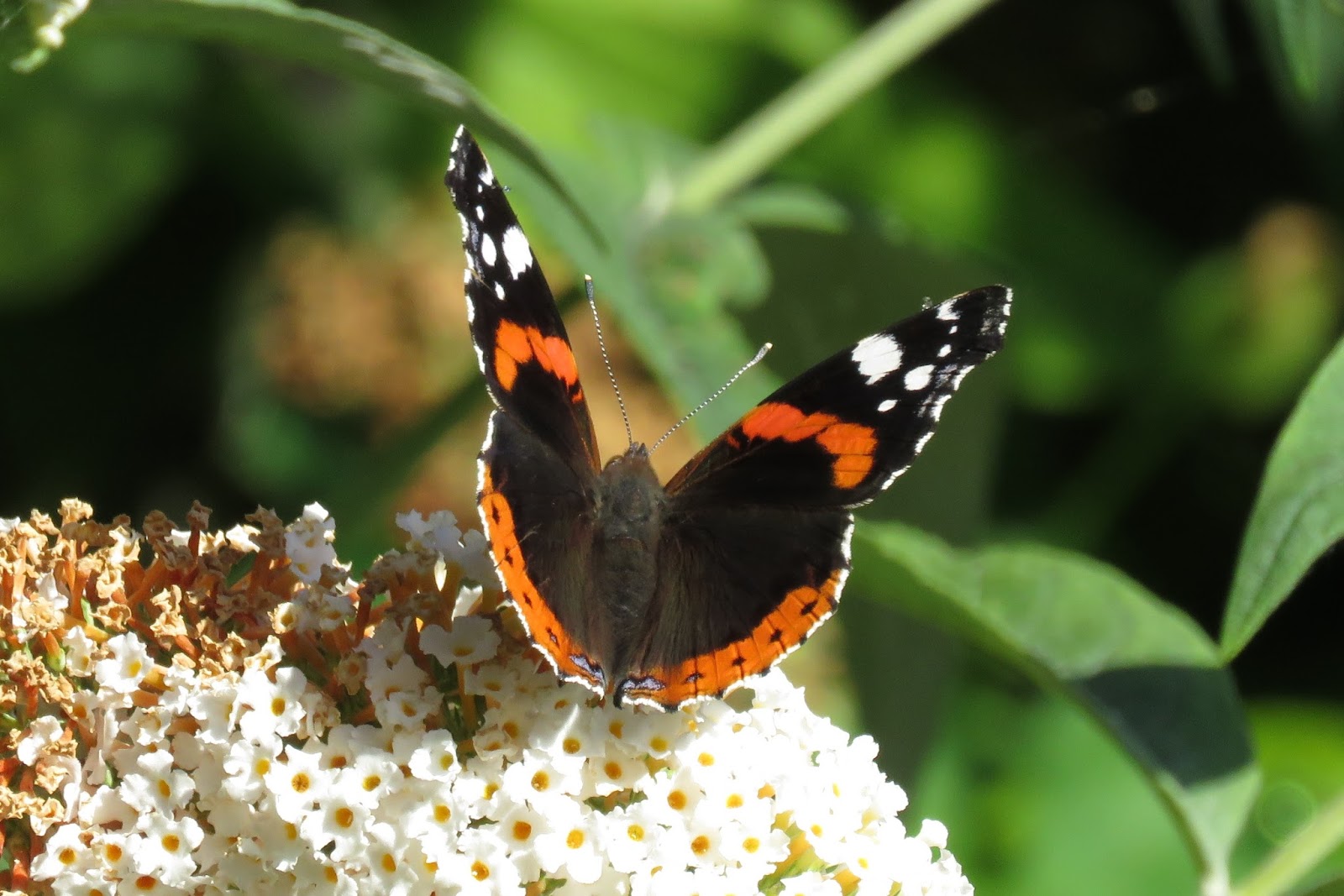
Bumblebees of several species were nectaring in Large
Bindweed and very nicely made up Painted Ladies and blushing Red Admirals were
particularly attracted to the white budhlias.
Chiffchaffs, Whitethroats and Blackcaps were all calling and
a scaly Green Woodpecker yaffled in the chestnuts as it flew in from the play
ground.
 |
| Bombus hortorum |
 |
| Painted Lady |
 |
| Red Admiral |
 |
Willoughby’s leaf cutter bee
Megachile willughbiella |
Southern and Migrant Hawkers were patrolling the tracks but
there was no sign of the Lesser Emperor but is now probably out hunting over a
ditch somewhere. I finished my walk up with a nice juvenile Marsh Harrier drifting
over, several ever growing wasp Spiders and a delightfully tame backlit
Speckled Wood.
 |
| Deadly Nightshade is looking good |
 |
| Deadly Nightshade still flowers too |
 |
| Southern Hawker |
 |
| Marsh Harrier - interesting underwing |
 |
| Speckled Wood |
 |
| Blackberry stuffed juvenile Blackbird |
 |
| A yet to find/eat a mate Wasp Spider |
Being a Tuesday in the school holidays, the rest of the day
was spent engaging with the families arriving for pond dipping and mini-beasting with little time for personal escape but if just one of these kids
catches the spark to go one and become a budding naturalist then all the daily
repetition from me is worth my time and effort...