9th-17th October 2017
It has been a somewhat full on first week back at RSPB Rainham Marshes after the
Shetland Adventure with seven full days that started with a fly over
Red-throated Pipit on the Monday afternoon while showing round two VIPs, some
unexpected gardening on Wednesday, a Thursday spent hosting some of the top bods
from the RSPB and National Trust and a weekend that for some reason resembled an August Bank Holiday. There were other ornithological highlights with a
substantial finch movement over the weekend that included quite a few Lesser
Redpolls, Siskins and the odd Brambling among the many Chaffinch along with the first Tree Sparrow of
the year. Reed Buntings, Mipits and Skylarks were also up in numbers and there
were morning movements of Redwings and the first four Fieldfares.
 |
| Chaffinches were the commonest migrant with over 1000 in two days - Dante Shepherd |
It was thus not too surprising that we picked up a female Merlin
as well as increased Sparrowhawk activity. Top prize went to the Motley Brew for finding
a nice male Dartford Warbler along the river wall on Saturday after I had been
talking the species up during the morning.
 |
| Dartford Warbler - John Humble |
And so to the last two days...
Yesterday was spent on the Norfolk coast with a 0730 meet at
Lady Ann’s Drive to ensure some good early Pinkfoot action for my party. It was
grey and overcast and with only a light southerly breeze with no hint of the
effect of Ophelia other than the warm temperatures. She would make herself known as the day
progressed.
 |
| Pinkies |
Starlings were streaming overhead and then coasting west
having obviously arrived while Redwings did the same but headed south and four
high Grey Herons were the first of two such groups that we saw newly made
landfall.
We had not even made the wood edge before four more herons
came across on the same path but these were white... Four Greats heading west
on lumbering wings and we had not even seen a Little Egret at that stage!
 |
| Great White Egrets in the early gloom |
Our walk along the inside of Holkham Pines produced usual
fair with copious quantities of squeaking Coal Tits and Goldcrests but we were
fortunate enough to see two Firecrests including one that showed incredibly
well in the Holm Oaks but we only found one Chiffchaff and no other warblers at
all. Two more Great White Egrets (apparently the resident ones) were out on the
marsh and small parties of Chaffinch, Lesser Redpoll and Siskin moved west with
many hundred more Starlings.
 |
| Great White Egret |
We were down by the last hide when five more Great White
Egrets drifted in from high above the pines and continued west... what was
going on? Eleven GWE’s in Norfolk?! A Marsh Harrier quarted the freshmash and
Angie got bonus points for finding the juvenile Osprey that had been
frequenting Holkham Hall lake actually hunting just in front of us and it even
had a quick splash down before heading back over the treeline with a small fish
grasped in its talons and two Magpies hot on its tail.
 |
| Another five Great White Egrets! |
 |
| Osprey |
 |
| Osprey |
Pinkfeet were still streaming out of the area and heading
for inland feeding sites but I could not see anything different with them. We
cut through to the beach to discover and mirror flat North Sea with not a
single wavelet in sight. Gannets glided to and fro with no obvious direction
and a trio of Great Crested Grebes bobbed offshore but nothing else. Starling flocks were still arriving, flying
butt-clenchingly close to the surface as they made it to the beach. It
surprised me that they do not simply put down in the first pines but still have
the energy and urge to continue west after a moonless night spent out across
the empty vastness of the sea.
 |
| A Spurge - not sure which one yet |
A few Meadow Pipits and Skylarks were also seen coming in
off but the beach was devoid of any waders whatsoever. A Painted Lady was feeding on Ragwort and a
couple of Red Admirals and Speckled Woods were seen while Migrant Hawkers and
Common Darters were still abundant.
 |
| Red Admiral |
A peculiar fungi was found in the dunes and I will add a
name once I have found one!
 |
| Most peculiar - help accepted! |
 |
| I do like Galloways... |
Elevensies back at the car with a brief Red Kite almost with
the Osprey over the Hall, several Buzzards, Marsh Harriers, Kestrel and a
Sparrowhawk kept the eyes active and both Grey and Pied Wagtails flew over
before we left.
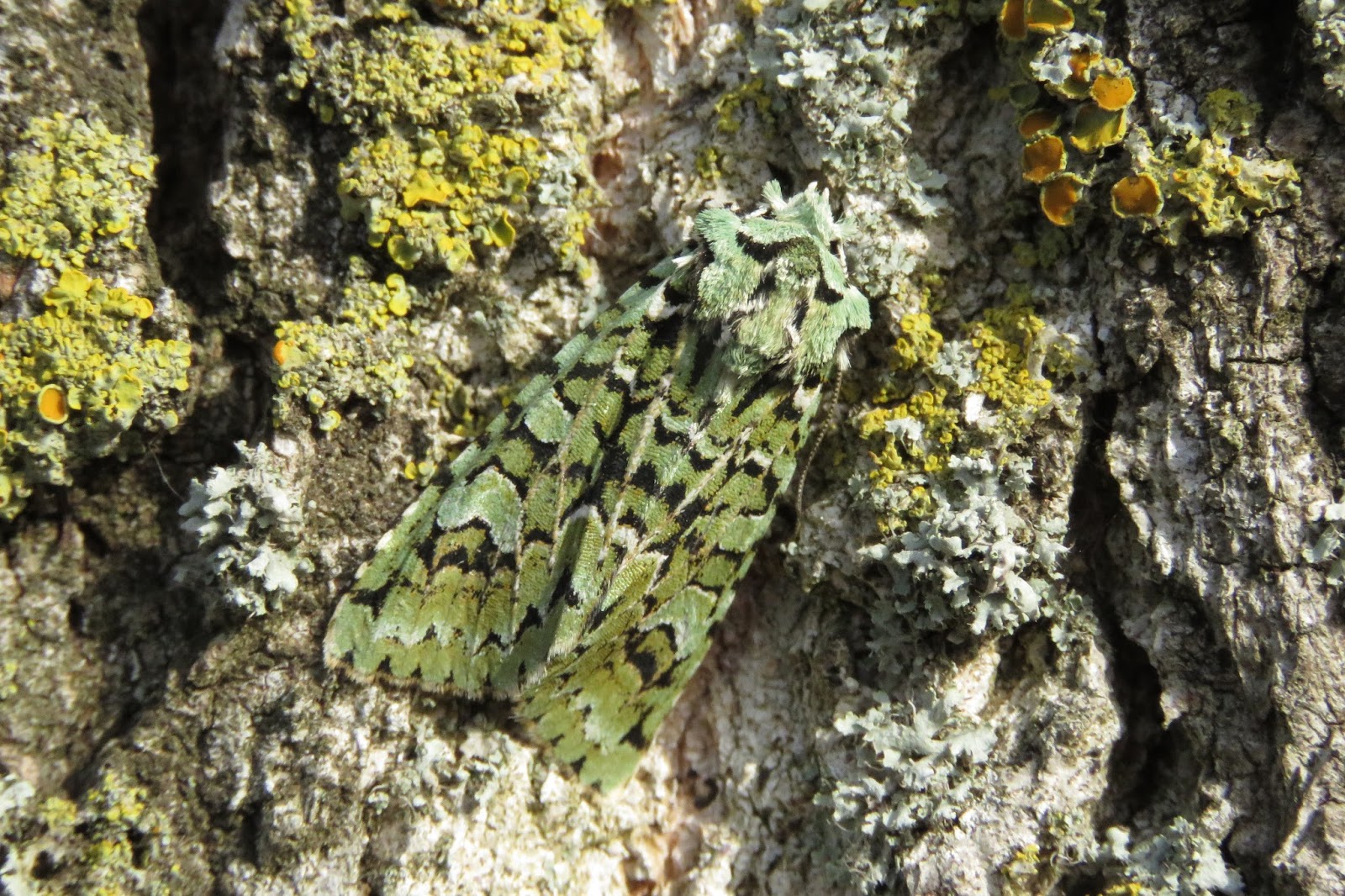
With a smidgen of sunlight Antony produced a little pot with
a very special moth in it. He has been catching Merveille du Jour for a while
now and early that morning was no exception so he brought one with him for us
to see.
I have longed to see this vermiculated green noctuid and everyone
I know has been catching them recently so this was a real drum roll moment.
Antony coaxed her out onto a poplar trunk with appropriate lichen and she
immediately disappeared into the background.
 |
| Merveille du Jour |
 |
| Merveille du Jour |
 |
| ... and an equally handsome Mesembrina meridiana on the same trunk |
Westward now, like the Starlings, finches and egrets to
discover a totally packed RSPB Titchwell car park but we all eventually
squeezed in. The toilets were full of cool moths including several Mallow and
November and a cluster of over 30 Eristalis
tenax hoverflies were congregating in the eaves presumably with the intent
of possibly hibernating although I shall look into this further!
 |
| Eristalis
tenax hoverflies |
The light was starting to look a little funny and a watery
sun was shedding little light and over the next two hours the landscape took on
a curious soft feel with muted colours that had an orangey cast at the same
time. If it is possible for something to be subdued and illuminated at the same
time then this was the light for it.
No sooner were we on the wall that a shout of Cranes had us
looking towards Thornham where nine somehow shiny Common Cranes were
laboriously slugging their way into the now seriously increased wind. They were
tacking but seemed to gain little distance for their efforts but what a
wonderful sight and the largest flock I have ever seen away from the breeding
grounds. The day of the Big Bird
continued...
 |
| Nine Common Cranes - Antony Wren |
A standard but varied variety of waders and ducks covered
the lagoons with spangly Ruff of various sizes and two Little Stints being the
pick. Starling flocks were still arriving and Bearded Tits flicked across the
path staying low to avoid getting displaced!
 |
| Starlings in off |
Little Egrets (but no Greats!) and Brent Geese dotted the saltmarsh
and a Water Pipit came up from a reedy pool. Down at the sea it was still very
calm with four Scoter and more Gannets seen but the wind was whipping up the
sand and driving it down the beach and through us so we did not last that long!
 |
| Our second species of Osprey for the day |
 |
Dark-bellied Brents
|
 |
| Black-tailed Godwits - Paul Rigby |
 |
| Black-tailed Godwit |
 |
| Bar-tailed Godwit |
 |
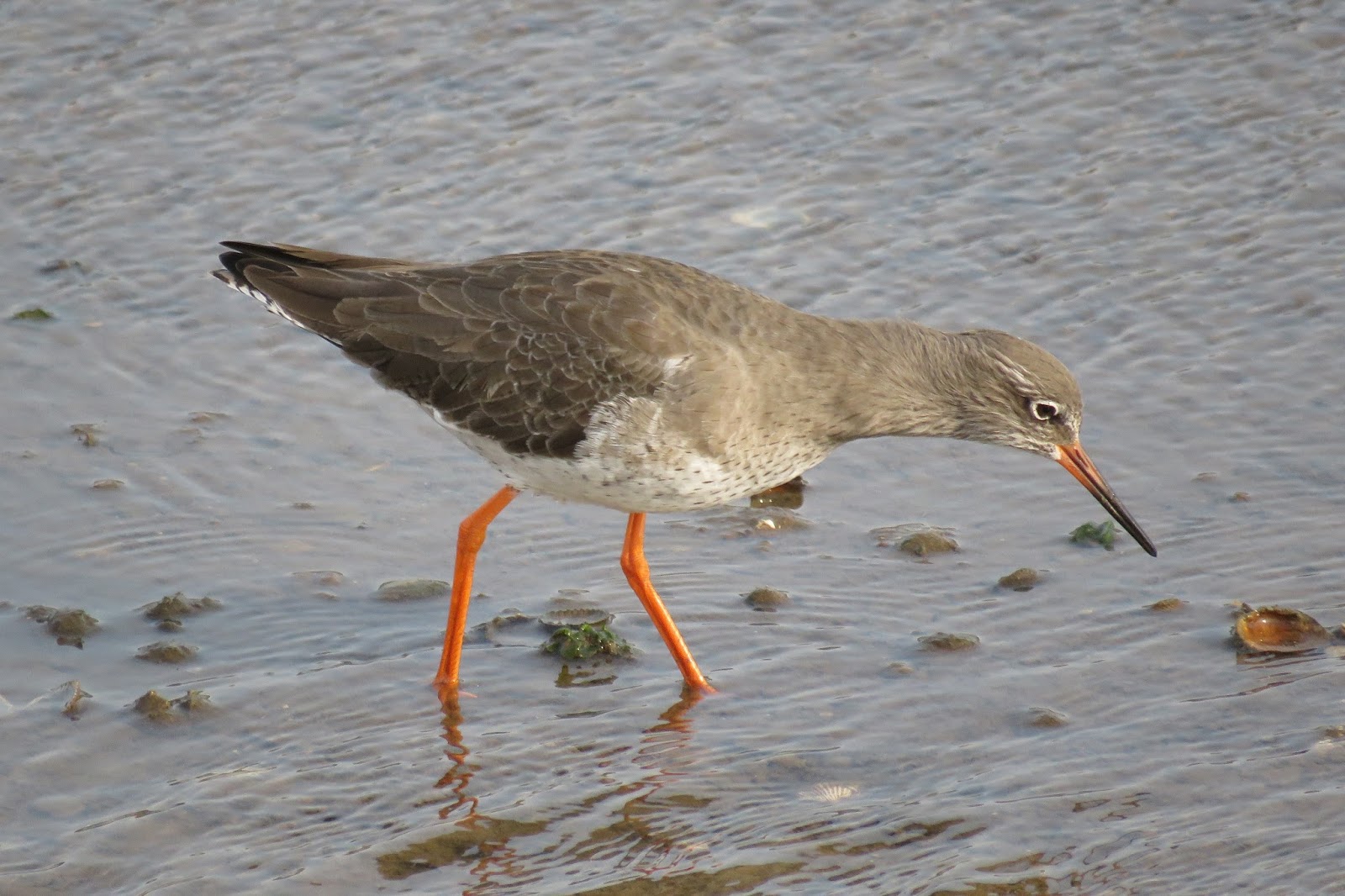
| Redshank |
A Water Rail was feeding fully in the open on the last tidal
pool and a female Pintail with some dapper Mallards was the only one we saw all
day. Titchwell is always a good place for bumping into old friends and today
was no exception with Big Pete and Mark W both now living up this way and
Maggie D visiting friends from her new home in Dumfries and Galloway! Throw in some Rainham and even Lesvos
regulars and there was a great atmosphere as ever.
 |
| Water Rail - Paul Rigby |
 |
| Pintail |
 |
| Mallard |
 |
| Teal |
 |
| Teal |
The heavens were becoming even more foreboding and given that it
was 3pm we decided that a very late lunch was in order. It was while munching
cake that the sun reappeared as some post apocalyptic fiery orb about to fall
from the sky. The sky had darkened
further and birds were behaving erratically. There was not the silence that
occurs during an eclipse but the local Starlings were massing to roost in the
reedbed and descending as a silent hoard with no murmurating, gulls were streaming
of off the sea, Little Egrets headed towards the trees and the Marsh Harriers arrived from all
directions to circle their own night time spot with 13 on view at once.
Everywhere you looked the sickly sky was full of confused wings.
 |
| Starlings |
One last look around produced one of the strangest sights of
the day. A mass of Grey Herons were arriving low over the beach from out to sea,
all the way being buffeted by the fierce head wind. They briefly stopped but
were soon inexplicably on the move again and 21 of the 27 continued low and
west, re-hugging the beachline.
 |
| Part of the Grey heron flock in the fading light |
With the trees starting to thrash and the light seriously
fading despite the early hour, we decided to cut our losses after a superb day
and head back south into Ophelia’s blustery skirt tails.
Tuesday
Not too many hours later, I found myself in another car and
heading down to Dungeness into another peculiar dawn where the pink globe of
the sun just suddenly appeared at mid-height in the sky as if it had been
placed there rather than it ‘rising’ in the customary fashion. The light was
once again odd with the constant threat of rain always on our minds but at
least it did have the decency to shed a few sandy droplets this time just to
prove that it was still harbouring the debris of Ophelia’s rampage across the
Iberian Peninsular, Biscay and the west coast of Britain and Eire.

Our visits to the ARC and Burrows Pit allowed us to collect
a staggering 14 Great White Egrets along with 11 Littles and even the lone Cattle
Egret. Water Rails squealed and Cetti’s were vocal but it was otherwise quiet
around the RSPB reserve. The egrets were amazing to see and we had ten on one
island at one stage. One of these is a colour-ringed juvenile from this year’s
successful breeding in Somerset. Surely
it cannot be long before the stay all year at Dungeness and settle down to
breed. Who would have thought that we could see 25 Great Whites at just two
sites in two days? It really would have been unthinkable even a few years ago
and I find it quite fitting that my first rarity way back in August 1984 was a
GWE that we stumbled on at RSPB Minsmere on my first ever family visit to the
reserve aged 12. I can still remember it perched up in a scraggy oak way over
near the current Bittern Hide as we looked through my Dad’s black drawtube
scope from the path to the Eel’s Foot...

 |
| Great White Egret |
 |
| Great White Egrets - not all on view but there are ten in this shot |
The weird sun was making the sea even more peculiar with a
vivid aquamarine area close in and shades of grey further out with an orange
grey sky. Gannets milled around and six Razorbill and a Guillemot, Red-throated
Diver, five Kittiwake, four Med Gulls and two Sandwich Terns were seen during
out 30 minute watch. Rock Pipits and both wagtails were on the filterbeds with
Starlings and a few Chaffinches and Siskins and Redpolls were moving over in
small parties.
 |
| The Odd Sea, Sun and Sky |
Three Firecrests bumbled around the Lighthouse garden with
two Goldcrests and two Chiffchaffs for company. A male Firecrest will always
take some beating and two of these were particularly showy.
 |
| Firecrest |
A Great Spotted Woodpecker was obviously new in and left the
garden and headed inland where it dived down into the gorse rather than head
for the more appropriate telegraph pole! A short wander towards the Britannia
pub to look for a Dartford Warbler was successful with a female type being seen
very well as it zipped around in a typically energetic fashion and eight late Swallows
called to each other as they headed west.
 |
| Shaggy Ink Cap near the Hanson Hide |
 |
| ... and gone over |
With the weather feeling like it was not going to brighten
we abandoned Dunge and headed for Oare Marshes for the afternoon and within a
couple of minutes of our arrival we had the delicate Wilson’s Phalarope and
lazy Dowitcher safely ticked off amongst the swathes of roosting Black-tailed
Godwits, Redshanks and Avocets.
 |
| Avocet |
 |
| Avocets and friends |
 |
| Young male Ruff |
A pair
of Peregrines watched from the pylons and Marsh Harriers quartered the
shoreline while hundreds of Brent Geese and many Little Egrets were feeding out
on the eel grass beds off Whitstable.
The Phal was especially pleasing as it has now been around
for a couple of weeks and I was hoping it might stay around for me to catch up
with. I think my first Kent one was in October 1988 with my Dad, whilst
watching Grey Phalarope and ticking Oriental Pratincole at what was RSPB Elmley.
Happy days...
 |
| Wilson's Phalarope |
 |
| Wilson's Phalarope |
 |
| Wilson's Phalarope |
 |
| Wilson's Phalarope - Russ Sherriff's are slightly better than mine |
This one was particularly attached to duck... it was not
fussy with both Shoveler and Teal tailgated by this hyper-headed surface
gleaner. The duck were not very impressed at being followed so closely by a
stalker of a wader looking to pick up morsels brought to the surface by their
squibbling and a sudden stop may well
have resulted in a ‘Sorry Doctor but I slipped and fell on a phalarope...’
moment.
Meanwhile the Dowitcher eventually woke up and moved to his
usual spot where after a quick preen it was back to the snoozing once
again. Single Curlew Sandpipers, Little
Stint and Spotted Redshank were found before a Sparrowhawk put up everything
and we were literally left with nowt but the Phal and his Teal best buddy.
 |
| Long-billed Dowitcher, Golden Plover and Teal |
With that we decided that a head start on the traffic would
be in order and bid our farewells to this American double duo.
Let’s hope the Spoonbill that has been at Rainham the last
two days is there for me in the morning!