It was an early rise for a pre-breakfast jaunt down onto the
Cano Negro which was accessible less than a mile from the Hotel de Campo. It was grey and threatening and our trip in
the thankfully canopied boat was dogged by sudden sharp downpours but it was
hot and sultry and did not seem to affect the birds other than a brief appearance
of hunched resignation to the weather that seemed visible on every avian face.
Kingfishers were a key part of the journey and Ringed,
Amazon and Green all showed closely from the boat as we drifted by and occasionally
they would linger a while.
All the above are Amazon Kingfisher - male with the chestnut
male Ringed Kingfishers
female Green Kingfisher
There were herons and egrets in the usual assortment
of colours and shapes and the Boat-billedNight Herons were my favourite with
that outsized shovel.White Ibis were
feeding in the creeks with the odd Wood Stork and four Green Ibis were perched
up in a tree with some Anhingas and Neotropic Cormorants.
Bare-throated Tiger Heron
Boat Billed Heron
Boat Billed Heron - Andy Reid
Green Heron, Roseate Spoonbill, Snowy Egret, Tricoloured Heron & White Ibis
Snowy Egret, Neotropic Cormorant & Great White Egret
Great Blue Heron
Great Blue Heron
Great White Egret
Green Heron
Green Heron
imm Little Blue Heron
Little Blue Heron
Snowy Egret with more than it could manage
Green Ibis
Roseate Spoonbill
Roseate Spoonbill
Wood Stork
Tricoloured Heron adopting the 'oh not again' face
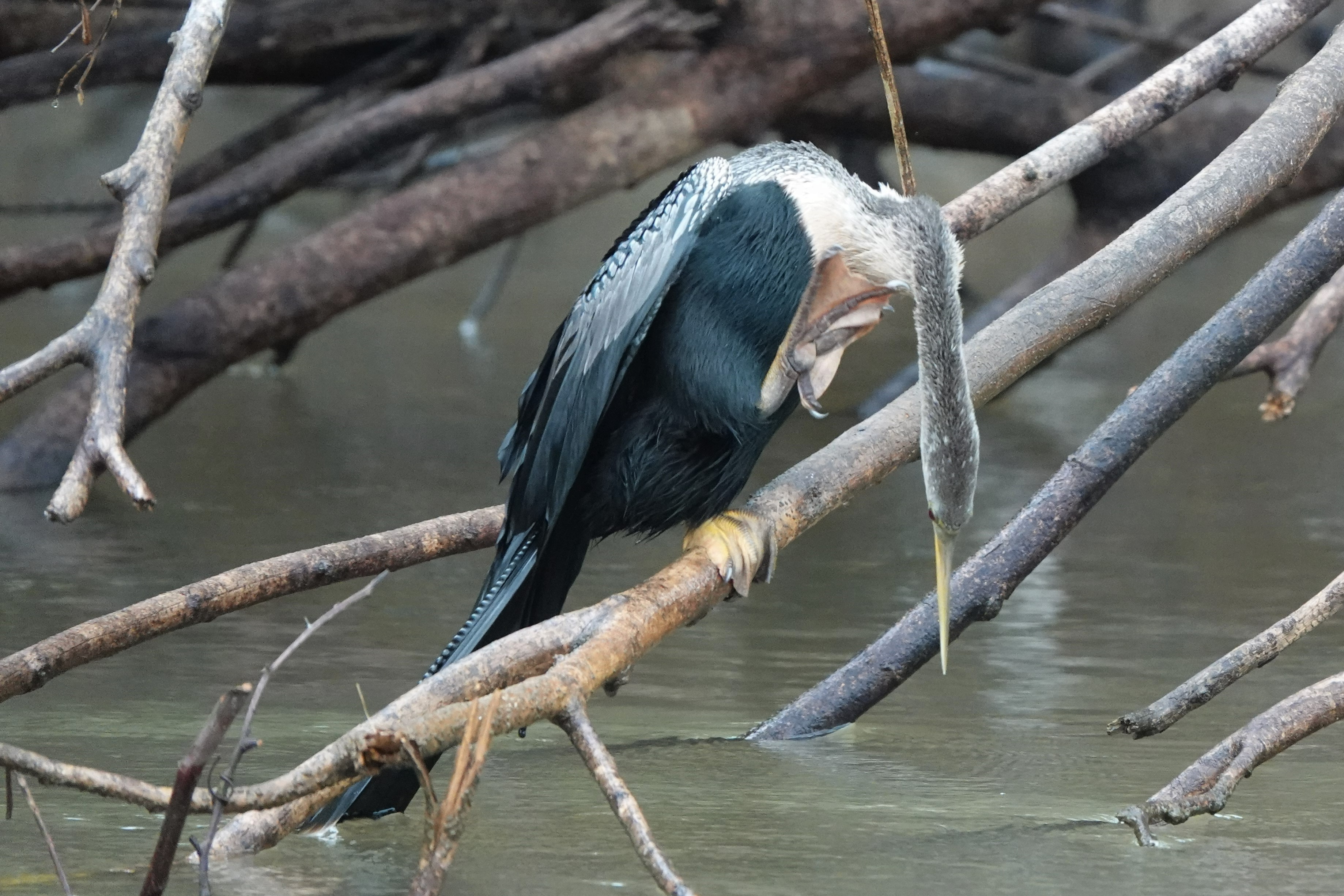
The Anhingas are always good value and watching that snaky
neck appear above the water and then retreat without a ripple always feels so
very unbird like.
Anhinga in all its guises
Anhinga - Andy Reid
Neotropic Cormorant
Limpkins boomed from the edges and we had great views of this
oversized rail out in the open especially after it rained. Smaller relatives
included Common and American Purple Gallinules and our first Rufous Naped Wood Rails of the trip.White-throated Crakes
were heard and a venture from the boat to a drying lagoon got us very close to
at least two rattling Grey Breasted Crakes but they would not give themselves
up. Northern Jacanas were tiptoeing along the margins and there was a fair cast
of waders with a mixed flock of Pectoral, Semi-palmated and Least Sandpipers
doing a circuit and Spotted and Solitary Sandpipers, Greater Yellowlegs,
Southern Lapwings and Black-necked Stilts on the muddy areas.
Limpkin
Rufous Naped Wood Rail
Black-necked Stilt
Black-necked Stilt
Southern Lapwings
Northern Jacanas
The star bird actually on the water though was once again the
Sungrebes and this time we saw both sexes.The female (like Phalaropes) is the more colourful of the two. It is
possibly the calmest, most chilled bird I have ever seen; swimming slowly in
and out of the overhangs picking tiny morsels from any leaf within its reach
and never making a ripple or a sound.It
was completely unphased by the puttering of the boat engine.
female Sungrebe
female Sungrebe - Andy Reid
male Sungrebe
Blue-winged Teals and Black-bellied Whistling Ducks were
noted and Osprey and Peregrine were both new for the trip and we also picked up
another Black Collared Hawk and Bat Falcon.
Black-bellied Whistling Ducks
Blue-winged Teals
Black Collared Hawk
Osprey
The hidden lagoon that we went to
check not only produced the Crakes but three new Flycatchers withYellow
Tyrannulet, Slate-headed Tody-Flycatcher and an out of range Bran-coloured Fly
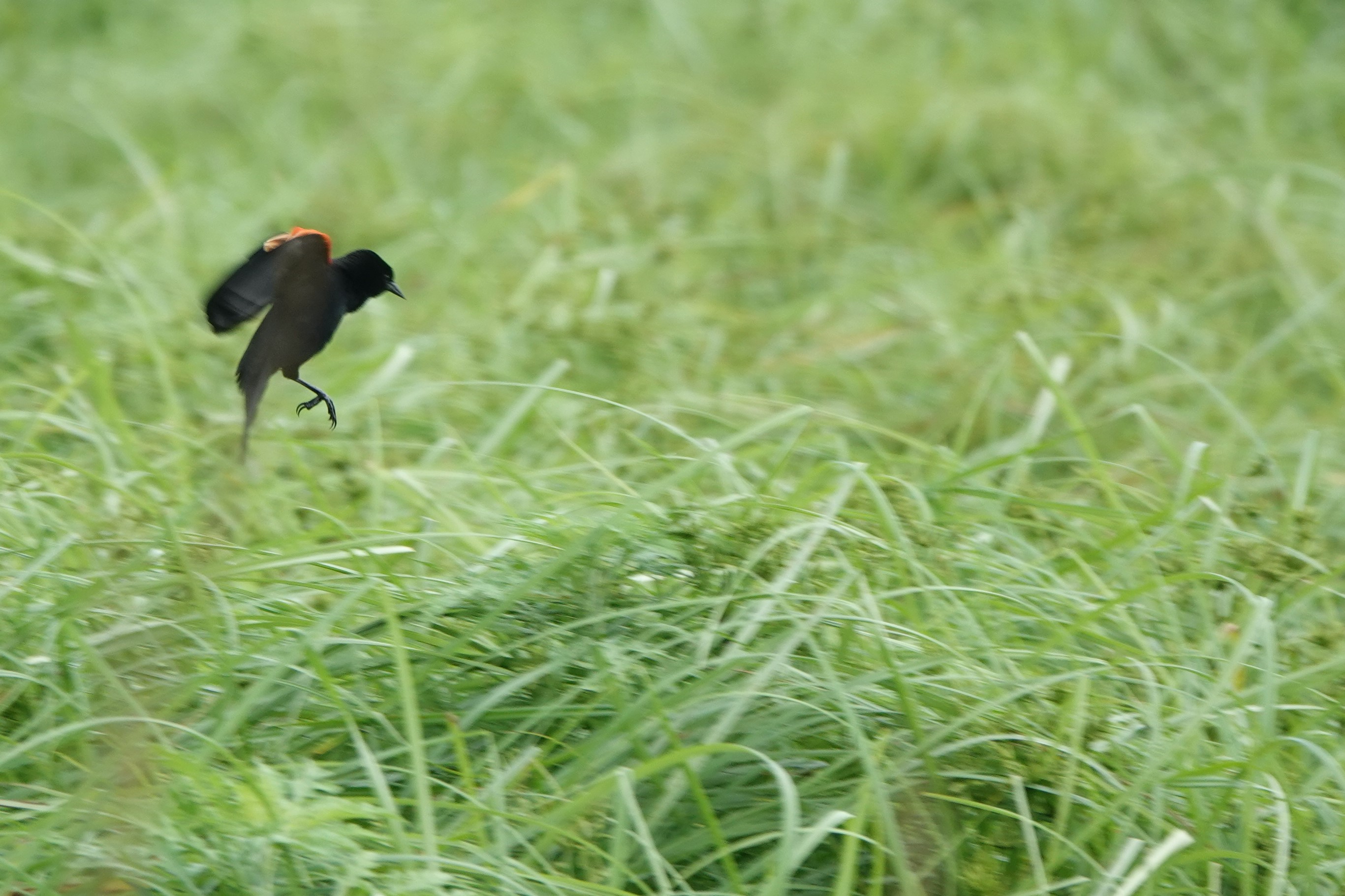
along with great views of displaying Nicaraguan and Great Tailed Grackles and
fluffed up Red-winged Blackbirds.
Nicaraguan Grackle
Nicaraguan Grackles
Nicaraguan Grackle
Red-winged Blackbird
Slate-headed Tody-Flycatcher
Yellow Tyrannulet
Yellow Tyrannulet
There
were Orange Chinned, Olive-throated and Finsch’s Parakeets raiding the orange
flowers and Baltimore and Orchard Orioles were joining in on the act.It was good to see a full male of the latter
decked out in mahogany and black. Northern Beardless Tyrannulet and Tropical
Pewee were seenand amongst the usual
selection of wood warblers were two glowing Prothonotary poking around just
above water level.They are just so
vivid. Barred Antshrikes, Canebrake Wrens and Blue Ground Doves were both in
song but out of sight and two Masked Tityras moved through the canopy that was
also occupied by lounging Green Iguanas and the odd lazy Mantled Howler.
Orange Chinned and Finsch’s Parakeets
Orchard Orioles
Prothonotary Warbler
Prothonotary Warbler
A very wet Tree Swallow
One of the highlights was once again the close encounters
with the Spectacled Caiman along the river banks.They may not be as down right scary as the
big Crocs we would be seeing later but I still would not like to be in the
water with them, unlike the local fishermen who obviously know their demeanour
better than I do!
Spectacled Caiman
Meso-American slider (Trachemys venusta)
Green Basilisk
Green Basilisk
Back for breakfast (passing a pair of Bronzed Cowbirds on
the way) and time for another garden circuit.I tried to find my feeding flock from yesterday but it was very quiet
although I did find Yellow-throated Vireo again and a showy Lesser Greenlet.
The Grey-headed Doves and Dusky-capped Flycatchers were still in situ but the
Spot Breasted Wrens were playing hard to get but everyone eventually succeeded
with the added bonus of a pair of Shining Cowbirds and a male Black-headed
Trogon doing what they do best – staring us down.
Black-headed Trogon
Black-headed Trogon
Toad rescued from Sally's shower
Bilimbi but flowering this time - how weird
Starfruit
Ginger
It was time for the longish drive back south towards our
lodge at Sarapiqui which would put us on top of La Selva.The journey was enlivened by the now usual ‘from
the bus birds’ but started with a Bat Falcon that moved like an avian missile
after an invisible snack. A Giant Cowbird then flew over the road and a Lineated
Woodpecker did likewise. A couple of Roadside Hawks were on inevitable perches
and lunch at the Iguana Café provided Steve with the opportunity to once again
not look at House Sparrows.
Crested Caracara
Green Iguanas
House Sparrows just for Mr Bird
The sterile Pineapple fields
The lovely La Quinta Lodge greeted us warmly with on tap
coffee and Golden Hooded Tanagers feeding young in a nest before a relaxing session
at the feeders gave us some almost natural views of the regular attendees
including Passerini’s, Blue Grey and Palm Tanagers, Honeycreepers, Saltators
and Black-cheeked Woodpeckers. The Red-throated Ant Tanagers were a little shy
and only appeared briefly.
Golden Hooded Tanager
Golden Hooded Tanager
Palm Tanager
Passerini's Tanager
Passerini's Tanager
Passerini's Tanager
Passerini's Tanager
Passerini's Tanager
Blue Grey Tanager
Green Honeycreeper
Red-legged Honeycreeper
Red-legged Honeycreeper
Red-legged Honeycreeper
Buff-throated Saltator
Black-cheeked Woodpecker
Black-cheeked Woodpecker
Clay Coloured Thrush
Variegated Squirrel
Variegated Squirrel
It was almost dark when the Collared Aracaris came in
There was still time for a walk around the grounds where the
drying ponds held two Green Ibis and Buff Rumped Warblers and the thatched
bridge was home to both Lesser and Greater Sac Winged Bats. They looked almost
identical but Steve’s gadget told us which ones were which.
Lesser Sac Winged Bats
Greater Sac Winged Bat
Green Ibis
Turkey Vulture in the vegetable garden!
Flocks of Orange Chinned and Finsch’s
Parakeets and noisy Mealy Parrots moved to and fro and we found a stunning male
Golden Winged Warbler and two black and yellow Black Cowled Orioles.A male Yellow Crowned Euphonia serenaded a
female from a dead snag and Orange Billed Sparrows started squeaking as the light
faded.
Common Tody Flycatcher
Ginger
Shrimp Plant
Vaux’s and White Collared Swifts moved through along with a
passage of over 40 Cliff Swallows and it was good to get better views of several
Chestnut Collared Swifts in the mix as well as at least four exotic looking Lesser
Swallow-tailed Swifts. A Blue Black Grosbeak sang from the Cannas as we called
it a night for dinner but not before a listen for an early Spectacled Owl drew a
blank but gained us a wondrous Nine-banded Armadillo trundling across the car
park!
A few of us had a wander after dinner with bat detectors and
torch in hand. It was noisy with insect life in the woods and the previously
unseen Caiman eyes glowed orange in the beams.There were several small ones dotted around but you could see mum
nearby. A Great Potoo flew over silhouetted against the sky and making a deep
croaking sound that made us all jump and there were a few inverts to be seen
including a cool Katydid, giant Cicada and the Mother of all Assassin Bugs at
about 1.5 inches long There was no way I was going to pick it up given the
proclivity of the little UK ones for sticking their ‘drinking straw’ in your
hand!
Owl butterfly cat
Toad
Steve was very taken by this furry Bracket Fungus
Anole
Cicada
Mother of all Assassin Bugs
Katydid
We left the denizens of the night to get to business and
slunk back to our rooms where the local House Geckos (definitely much smaller
than at Arenal) were making more of the same.
House Geckos
New Birds: * = life tick ** = new to
Costa Rica but previously seen elsewhere
My mind kept my body in bed a little longer than anticipated
last night but I still shuffled in for breakfast at 7.30 before deciding to
stay local and recharge prior to my afternoon airport run.
I popped to the Bakers and picked up a Koulouri for lunch
and then pottered out to the Tsiknias via Papiana where I failed to find a Scops
Owl but did see an illuminous Wood Warbler in the Olives along with both Willow
Warbler and Blackcap, a smart Black-capped Jay and a wire walking Persian Squirrel. The LowerFord reedbed was heaving with Acros with a constant
chunter of Reed, Sedge and Great ReedWarblers. I counted 12 of the latter and
they put on a superb show. The waders were as before and a female Garganey was
unconcerned by my presence but there were strangely still no Little Bitterns.
Persian Squirrel
Persian Squirrel
Black-capped Jay
Wood Sandpiper hiding from me
Wood Sandpiper
Great Reed Warbler
Garganey
Little Egret
Little Stints
Great Reed Warbler and friends
I followed the Lotzaria Triangle and once again saw
Woodchats, Whinchats and Whitethroats along with a showy male Collared
Flycatcher and several Spotteds. Corn Buntings sang all around and an Eastern
Olivaceous Warbler came out and said hello. Several dapper Tree Pipits were
feeding in a recently ploughed grove and a Common Kestrel looked only slightly
bigger than the Alpine Swifts cruising around.
Collared Flycatcher
Woodchat
My loop took me down alongside the KSP but there were
only five Gull-billed Terns and nothing new so I came back through Kalloni and
had a look at the White Storks on their nest as I navigated the 'interesting'
attempts at parking before veering back off and up to Metochi. It was quiet but
I did see a few Shrikes and Red-rumped Swallows and both Nightingale and Pied
Flycatcher.
White Stork
Whinchat
Whinchat
Walnut flowers
Back to the hotel for an attempt at writing up yesterday
before lunch and a final check of my afternoon client pick up plan.
There was time to spare so I stopped at the North East KSP
for a ten minute look which revealed the Dalmatian Pelican paddling around in
the Channel, two Black Terns (always a scarce bird here), the first Little
Terns and both Ringed and Kentish Plovers on the first pan.
On again and I opted not to tackle a congested Mytilini and
instead headed South around the east side of the Gulf of Jera. The scenery was
magnificent and I have never driven this whole route before. The Olive groves
looked fabulous and certainly contain some of the oldest looking trees I have
encountered. As is the norm this side of the island I could hear Sardinian
Warblers whenever I stopped and Middle Spotted Woodpeckers chattered within the
trees. Once out on the coast the low coastal scrub was blooming with pink and
white Cistus, Broom and Gorse. Eastern Black-eared Wheatears and Cretzschmar'sBuntings were soon seen and Short-toed Eagles and a Lesser Kestrel were noted
but I did not have long to stop and look around. Once at the airport I could
see small parties of Yelkouan Shearwaters flicking South.
Helichrysum conglobatum I believe
Short-toed Eagle
Short-toed Eagle
Cretzschmar'sBunting
Cretzschmar'sBunting
A slightly odd feeling Eastern Black-eared Wheatear
Red-rumped Swallows
The 3.45 touched down on time and I was soon underway with
Peter and Lynne, the first of my four clients. I asked if they wanted the hotel
or birding en route. The answer was resoundingly ornithological.
I was aiming for the western pans and Lotzaria but the lure
of that Pelican was too much as they are prone to escaping unseen and so we
pulled over and then very successfully did the track adding not only the Iceberg
back on the usual island but a host of seemingly newly arrived waders with a
summer plumaged Grey Plover, 35 Little Stints, nine Curlew Sandpiper, the
earlier Plovers, 19 Greenshank, Marsh Sandpiper and a few more Ruff and Wood
Sandpipers. I even relocated the Bar-tailed Godwit from yesterday. A first
summer Little Gull was preening with some Terns but the Blacks had already
moved on. To the east of the track three Zitting Cisticolas bounced around on
invisible elastic bungees. It is so good to have this species back on the
island.
Dalmatian Pelican
A dark backed Squacco circled us and even landed long enough
to get the scope onto and two White Storks and a Black Stork were added to
Peter and Lynn's fast growing list. Spanish Sparrows, Red-throated Pipits and
flava Wagtails were off with some sheep and three Short-toed Eagles and a
Kestrel were up over the ridge.
With time pressing on we headed down the other side of the
pans where the Gull-billed Terns were still loafing and a Common Buzzard was
watching for prey. A paraglider (with a big fan) was very low and buzzing the
whole area although to be honest we probably would not have seen the Hoopoe by
the pumping station if it had not just gone over!
Whinchats lined our route back through Lotzaria before a
superb final session at the Lower Ford amongst a blizzard of Sand Martins and
Swallows. The Great Reed Warblers once again performed very well and two Glossy
Ibis and the Garganey had not moved far.
Little Ringed Plovers
Little Egret
Garganey
Great Reed Warbler
Great Reed Warbler
It was time to go but I almost added a perched Nightingale
to their first afternoon tally but had to make do with Blackbird,Spotted
Flycatchers and House Martins as a finale.