My big twitching days tend to a thing of the past nowadays with the odd invite now and then to see something new that tickles my ornithological fancy so an invite from Bradders to head to Bempton to look for the Turkestan Shrike appealed partly because I would also get my first chance to see the Black-browed Albatross that has increasingly spent the summers there. The world, his wife and their dog have all seen it or at least attempted to see it over the last three years and this was my opportunity to join the club.
I was fortunate enough to see the original ‘Albert’ at
Hermaness at the very tip of Unst in the Shetland Isles back on the 14th
April 1995 where he strutted around his ledge way below us from our precipitous
overhanging viewpoint We were lucky he
was there and a fly round was never going to happen.
So fast forward 27 years and after a few hours kip at Chez
Bradnum we headed cross country to meet Messers Lethbridge and Vaughan at Stansted
before the journey further north. It was
already light at 4.15 when we set off and the journey up was enlivened by Red
Kites, Buzzards, Hobby, Kestrels and Ravens.
It was a grey and patchy skied morning with rain threatening all around and once in the main reserve car park it became a very cool walk back down the lane and then onto a gravelly track towards the farm where the Shrike was residing. There were birds on the way down with singing Corn Buntings, Skylarks, Whitethroats, Tree Sparrows, Meadow Pipits and Yellow Wagtails and after coughing up a tenner each to the farmer we were allowed into the ramshackle yard with piles of deceased fridges and other miscellaneous metal scrap to stand and look for the bird in the adjacent hedge.
The gusty
wind and spitty rain were always going to keep it low and we had to wait twenty
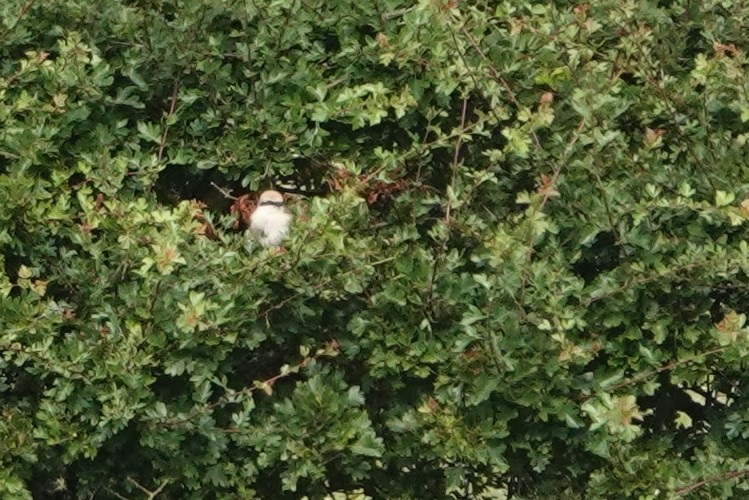
minutes for this cracking male to pop its head out from the middle of the
hawthorns. It watched the world for a few minutes and then reversed back in.
 |
| Turkestan Shrike |
 |
| Turkestan Shrike - Pete Webster stayed longer than we did and was in the right spot when it came closer. |
Another short wait ensued before it did the same again but
this time came fully out and clambered along before diving back in. The head was boldly marked with contrast
between the rich coloured crown and the slightly greyer mantle and a broad
black mask while the tail was richly fiery red.
To be honest I can’t see much in the way of differences between this
male and the male at Cliffe in October 2011 that was not assigned to either
Daurian of Turkestan but hey ho.

I have to admit that I was itching to go and see the
Albatross that was sitting on his ledge about 500m away over the rise and as it
did not feel like the Shrike was gong to be popping up on top of the closer
hedge I headed the way with the lads not far behind me.
A few minutes later I had seen it standing on his ledge down
at Staple Newk and having a quick preen before settling down for a kip. I was happy but so wanted to see it fly this
time and thankfully we all got lucky as a Gannet came in and landed on it
forcing and immediate evacuation to the skies where it circled once and then
headed majestically out to sea with barely a beat and the westerly wind behind
it before ditching with a splash as a dot in the distance. I was elated and beaming.

 |
| Black-browed Albatross |
 |
| That first flight |
I ambled to the actual viewpoint so that I could look down
on the Gannets on the arch as well as the sub-adults loafing on the actual
cliff top when I picked up the Albatross coming back in. It veered little from
its course with just some light effortless tacking and then suddenly it was
just below us and spent the next 15 minutes or so circling this section of the towering
cliffs. There was much gasping from the
crowd gathered as has undoubtedly happened countless time since this huge bird
decided to call this its summer home.
Cameras rattled and memories were filed away with every graceful pass.

.JPG)


We came to see the Shrike (which if I was a good lister and
obeyed the rules) would be a new bird but we all agreed that nothing would beat
the performance from the Albatross. It
was truly epic.
I left the lads chatting away and ambled along the cliff top
ogling at the other species and taking in the
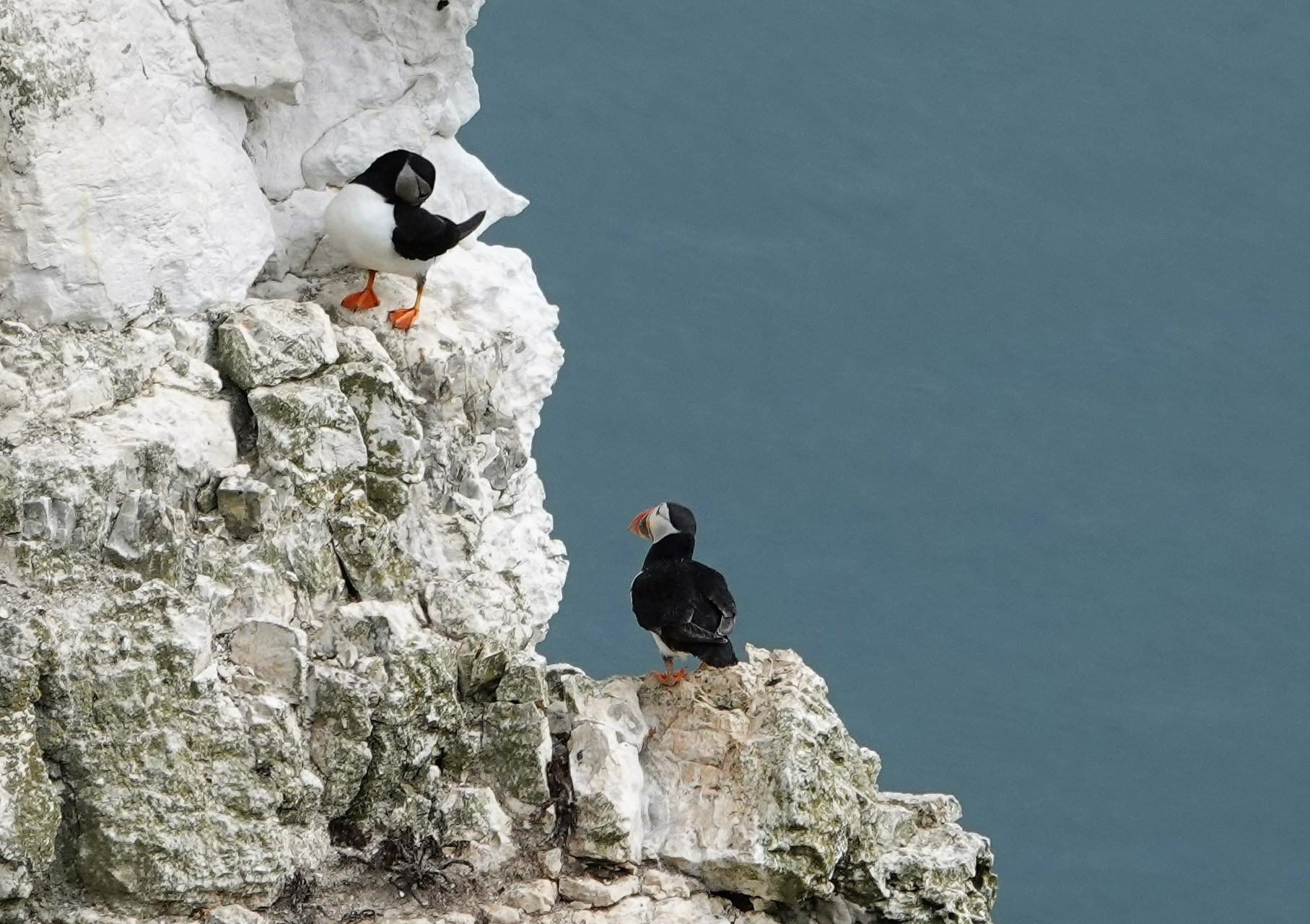
soundscape of grumbling Auks, crooning Puffins, cackling Fulmars and Gannets
and agitated Kittiwakes. I loved every minute of it. The westerly kept the smell to a minimum and
the birds below cliff top level but it was good to look down on the comings and
goings at a thankfully still healthy looking seabird colony.

If you look closely you can see vast amounts of blue and orange fishing net

 |
| 'The bloody Albatross went that way!' |

.JPG)
 |
| Gannets |


 |
| Puffins |


 |
| Five species in this one |
 |
| Spot the bubby Razorbill |


Rock Doves whizzed back and forth and although there are
some Feral type plumages amongst them most still look as smart as anything that
I see up on Shetland in the Autumn and they are still filling the same niche within
the cliff ecosystem.
 |
| Rock Dove |
I scanned further out for cetaceans but saw none but did
find a couple of Manx Shearwaters heading towards Flamborough. There sheer scale of the volume of birds on
these cliffs could best be seen when looking back south and it always takes my
breath away.


There was other wildlife to see too with two Brown Hares
lolloping around the top fields with Skylarks, Whitethroats, Sedge Warblers,
Reed Buntings and Meadow Pipits obviously second brooding with so much song
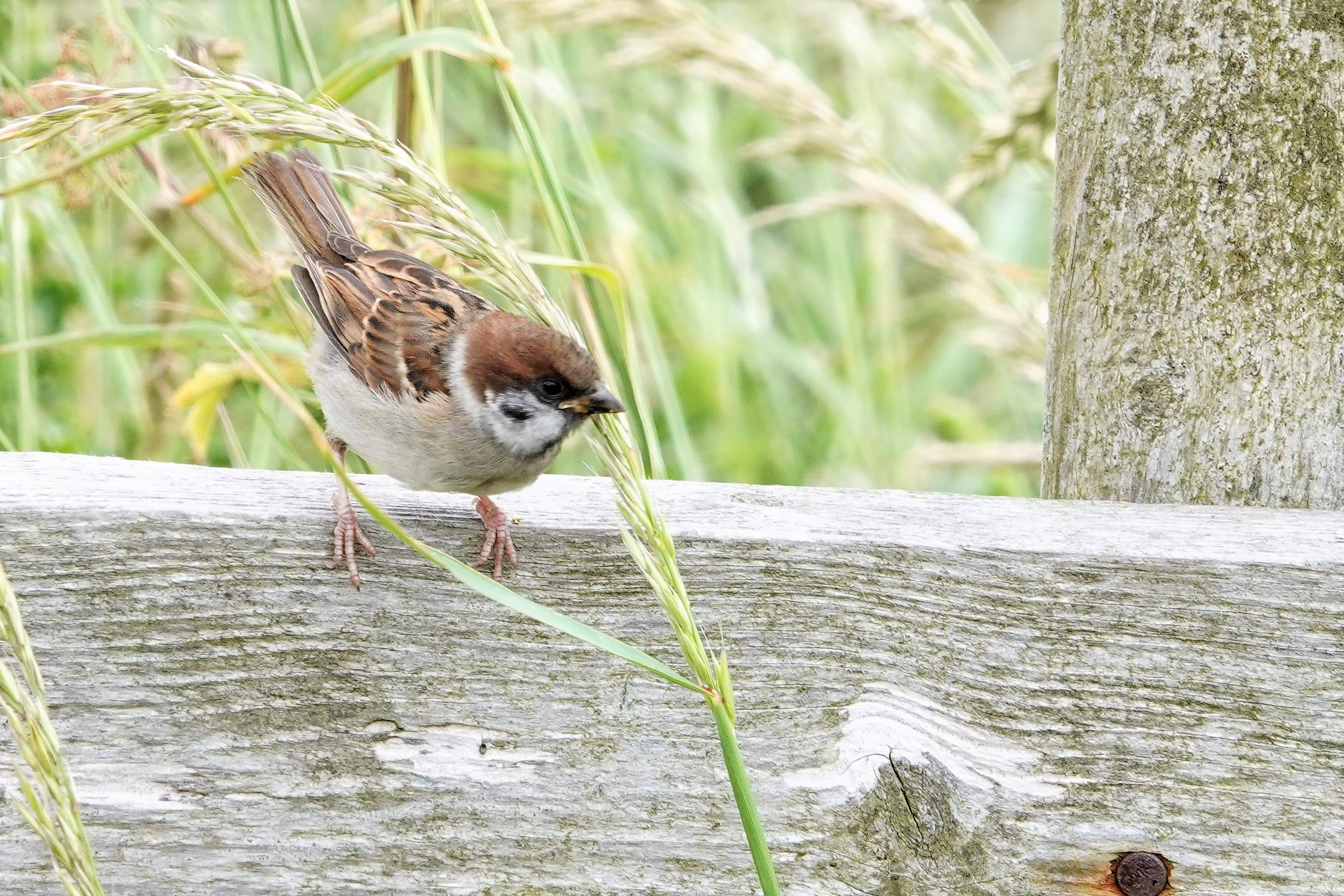
going on. Tree Sparrows regularly passed
over and I found a little dust bowl that they seemed to be fond of although I should
have helped out and removed the large stone for them! It is so good to see this species still
thriving up here.
I first visited back in the early summer of 1986 (I think)
on a Redbridge YOC holiday organised by my parents and had a fantastic first
experience with these mighty cliffs. Gannets were only just becoming established
and Tree Sparrows were everywhere. Happy days.

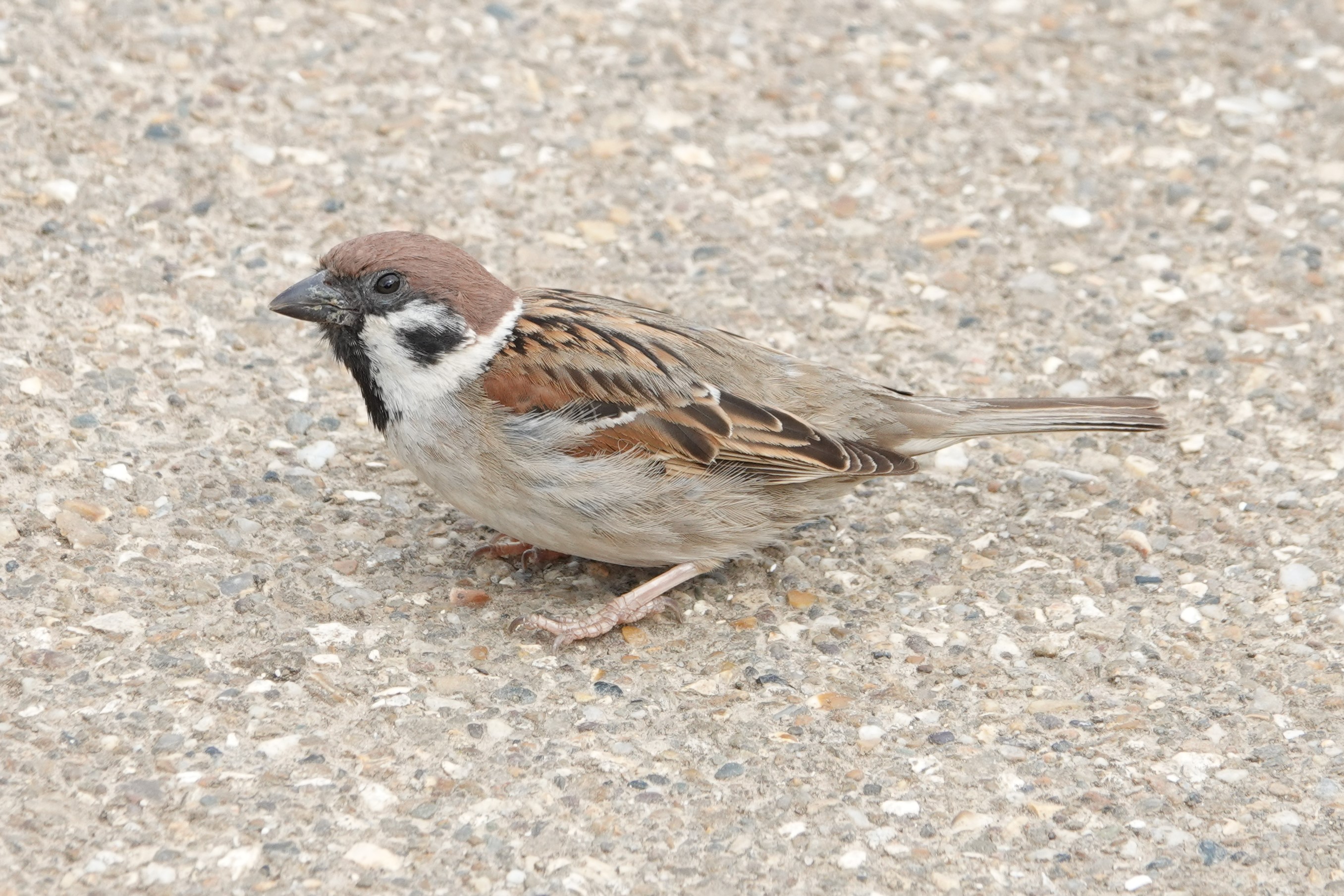
 |
| Tree Sparrows |
I found a few Pyramidal Orchids and what we think was a
Southern Marsh x Common Spotted along with many Narrow-bordered Five Spot
Burnet moths on the Trefoil and Knapweed.
 |
| Pyramidal Orchids |
 |
| Narrow-bordered Five Spot Burnet |
 |
| Narrow-bordered Five Spot Burnet |
 |
| Not sure on this robust Chamomile as I could not get near it for a sniff! |
 |
| Southern Marsh x Common Spotted ? |
We had toyed with going back for the Shrike which had briefly
popped into the farmyard but had soon returned to the hedge but decided to cut
our losses and start wending our way homewards. This took us to just outside of
Yorkshire and into Nottinghamshire at Newington. It took a little while to get there and I did
not mention my terrible track record with Caspian Terns in the UK but I needn’t
have worried as we stepped out of the car and there it was patrolling up and
down the back of the pits. They are always
such a powerful looking bird and we even saw it plunge in and come up with a
fish a Cormorant would be proud of.


 |
| Caspian Tern |
A Marsh Harrier patrolled further back and there were
Avocets, Lapwings, Oystercatchers, Redshanks and Little Ringed Plovers which is
fantastic for a such an inland site. The
lagoon look superb with shallow margins, bare islands and grassy areas. There was a big Black-headed Gull colony and
it was pleasing to find two fledged Med Gull chicks with a fine adult keeping a
watchful eye. Ginger brown young Black-heads were out exploring and there were
plenty of Common Terns and Sand Martins around and Sedge and Reed Warblers sang
in the channel edges. I am not entirely
sure who manages this site but it was very impressive.
 |
| Med Gull family |
From here we moved into Sherwood Forest and the Welbeck Raptor Watchpoint. I was unaware that it s actually just a mown verge with a view over the lake and the woods beyond but it was a pleasant spot to while away an hour of the late afternoon before the rest of the journey home. We may not have seen Honey Buzzard and Osprey but we did see lots of Buzzard action, Hobby, Red Kite and add Sparrowhawk to the day list. Yellow Wagtails and Skylarks were out in the wheat fields and Swifts and House Martins were patrolling the woodland canopy.

It was a good run home and I was indoors just after nine
after a fine day out made all the better with good company and banter and a
grand selections of memories to savour in years to come.