A just about dawn start saw me on my way east towards
Reculver Towers for an amble with Pat Hart. It was a very cold morning but with
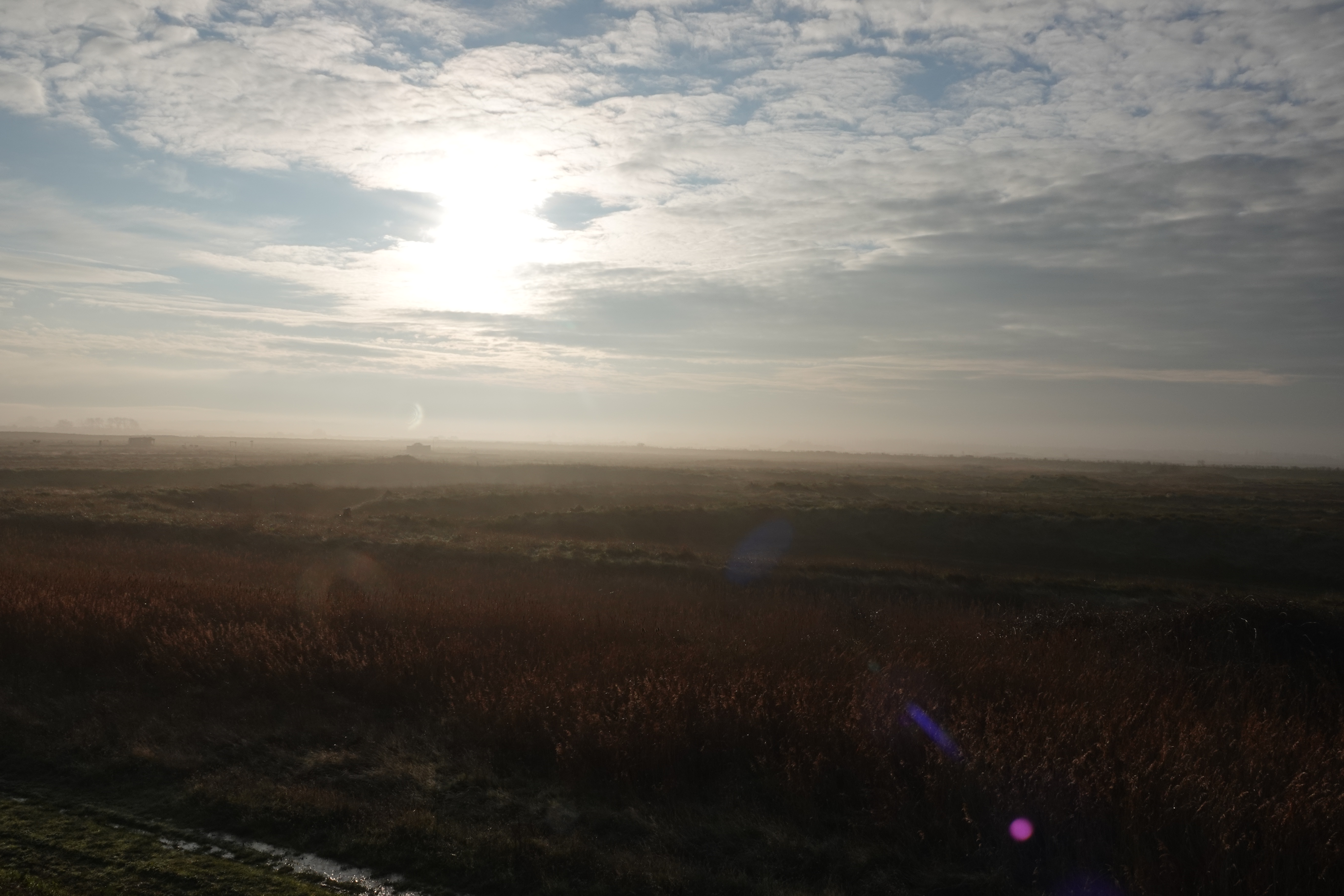
no frost and no breeze at all and it was a very eerie start to the day.
The tide was dropping and the Dark-bellied Brents could
easily be heard grumbling over half a mile away along the beach towards
Beltinge and a quick scan added a selection of waders to the day with scuttling
silvery Sanderlings, stop start Grey and Ringed Plover, Redshanks
Oystercatchers and Curlews. Two 1st winter Yellow-legged Gulls were
with gulls poking around on the seaweed but the dead calm sea was devoid of
life with only the distant windfarm to draw the eye.
 |
Brents with Herne Bay beyond
|
We walked up past the Towers where Starlings probed the dewy
grass of the Roman Fort and a couple of Blackbirds and several Robins were on
the walls and rocky breakwater.
 |
Greyish-breasted Rock Thrush
|
 |
Quality probing going on...
|
 |
Dewy Blackbird
|
 |
Monument Starling
|
 |
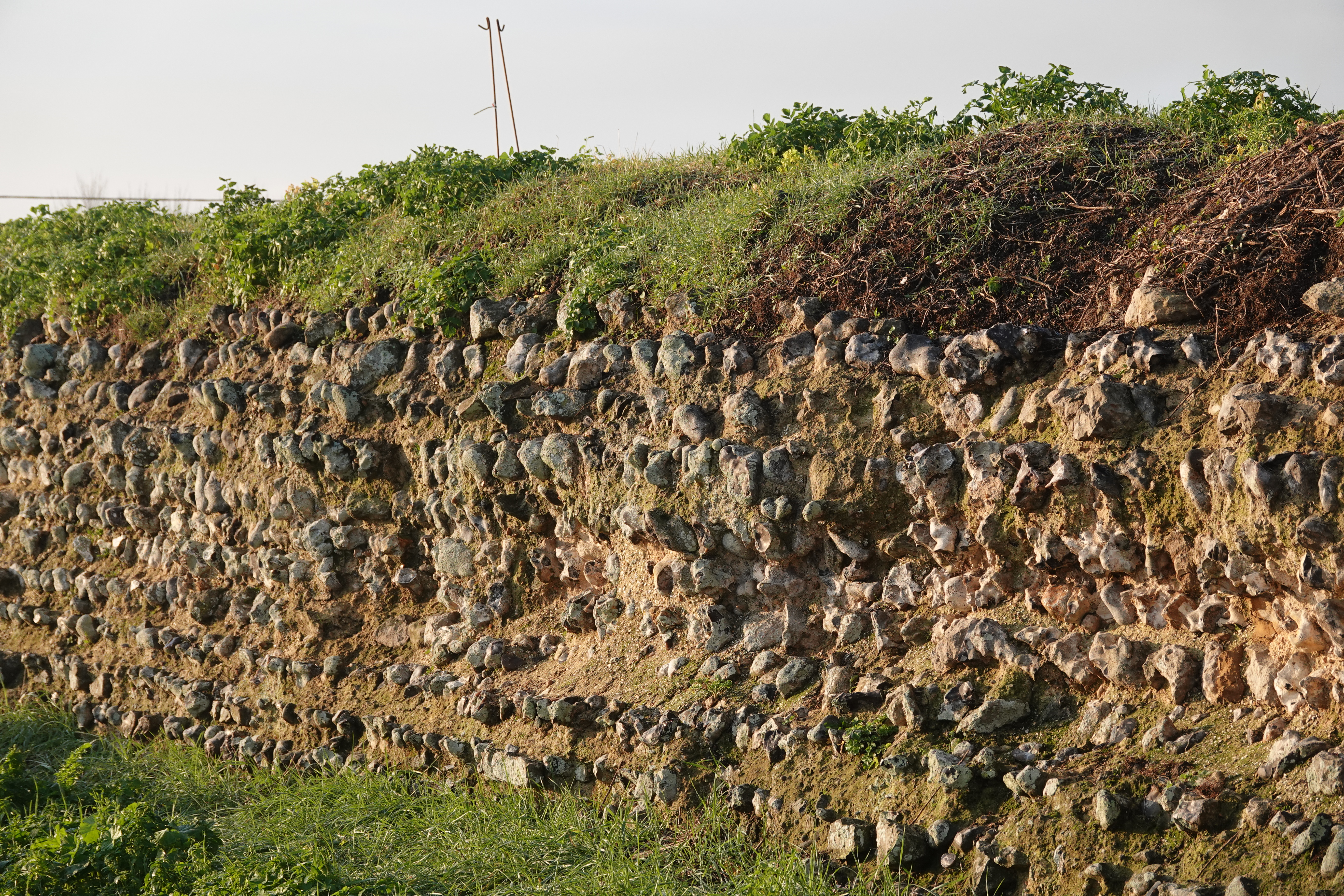
Part of the ancient Roman fort
|
I said to Pat that it looked good for Black Redstart and
then promptly found on just before the old Oyster farm. With no one else around
she was actually quite confiding and hopped up towards us with the rusty tail
all a quiver.
 |
Black Redstart - Me and my shadow
|
We had not gone twenty yards when another appeared on the
path and although still an ash brown bird, this one had much bigger whiter wing
panels.
House Sparrows chirped in the brambles and Meadow and Rock
Pipits were out over the old workings. We were hoping to find the huge flock of
Russian White-fronts discovered here yesterday but the unexpected early sun was
making looking inland almost impossible.
However it did make the hunting Short-eared Owl look
gloriously ethereal as it silently ghosted over the pits before alighting on a
pole. It sat there for ages with alert
yellow eyes scanning around and only got slightly agitated when a Redshank
kicked off.
 |
| Short-eared Owl |
 |
| Short-eared Owl |
The sun started to slip behind some hazy cloud and so I
scanned inland towards Shuart Farm and could make out a line of Russian White-fronts
feeding in a distant ploughed field but the light was still terrible but every now
and then you would get a flash of belly bars or white forehead blaze as well as
the odd snippet of goosey conversation between them.
A flock of Reed Buntings were coming down to feed on the concrete
cyclepath with a pair of Stonechats, Robins, Wrens and Dunnocks for company and a Song Thrush and
several Blackbirds erupted from the brambles. I could hear Corn Buntings and
after finding a couple a flock of about 40 came out off a grassy bank and
plipped away into the distance.
 |
Path Buntings
|
 |
Mr Stonechat
|
As we approached Coldharbour Point the Beltinge Brents came
in from the west for their wash and brush up in the freshwater outfalls there
but a Grey Heron spooked then and the flock dissipated with some heading inland
but the explosive goose scarers placed every few hundred yards were keeping
them on the move.
 |
Dark-bellied Brents
|
 |
How many Ringed Plovers can you find?
|
A Little Egret and a few Turnstone and Redshank were feeding
in the outfall and a flock of Herring Gulls dropped in for a bath. We had been told that two Snow Buntings had
been frequenting this area and almost immediately picked them up grovelling
amongst the Yellow-horned Poppies on the shingle in front.
Of course after just two shots my camera battery died and
being a numpty I had left the other back in the car. Naturally the buntings then came out to play
just a few yards away but were a joy to watch as they shuffled around
collecting seeds invisible to the eye.
 |
Snow Bunting
|
And a little video taken with my phone...
 |
Yellow-horned Poppy
|
 |
Stag's Horn Plantain
|
We decided to turn back at this point and then divert off
the cycle track onto the inland levee around the enclosed bay of the Oyster
farm. This was a good move with two
Yellowhammers calling immediately although I could not actually find them. Six
Grey Partridge rocketed out of the grass and I do not remember the last time I
saw them in Kent (although it was undoubtedly at Harty).
Reed and Corn Buntings were zipping all over the place and
it was great to encounter so many small seed eaters. It was actually not that surprising to
therefore find a delightful female Merlin sat in the winter wheat field
alongside us.
After a few head bobs and a shuffle she moved a little
closer in super low level stealth flight like a cross between a dinky Peregrine
stuck in a male Sparrowhawks body. This time she showed off that lovely barred
tail before taking off once more and powering up into the sky after something that
only she could see.
More Buntings and big Linnet flock were seen and the Russian
White-fronts left to the east in small parties before we even got to the
fields. I counted 84 in total with two
bonus Barnacles and a single Greylag in tow.
The geese all looked laboured in flight and through the scope I could
see that every bird had a double thick bill and dangling legs clogged with clay
from the field they had been in. I
presume that they were off to somewhere east to get cleaned up.
A solitary Lapwing called from the field but we could not
find it and two Mallard and a male Shoveler were the only ducks that we saw all
morning.
 |
Full of Buntings!
|
 |
A fine Cormorant
|
It was time for a coffee and a single Gannet far out on the
otherwise still quiet sea was added to the list before we headed inland towards
Grove Ferry.
A singing Song Thrush greeted us on our arrival and a Mistle
Thrush rattled over as we were getting our gear back on. It was still cold but the sun had begun to
sneak back out again.
Fieldfares and many Redwings came up in front of us from the
hawthorns as we started the walk and three Ring-necked Parakeets squawked overhead. I was hoping for a few birds to look through
from the viewing ramp but there was nowt bar a Mute Swan, Little Egret and six
Black-headed Gulls. Someone had stolen
all the duck and Moorhens and Coots. It was
very odd.
We took the usual path through the middle with a Kingfisher zipping
down a channel and Cetti’s Warblers giving the odd chic or two. A flock of 15
Russian White-fronts appeared and headed steadily north towards Chislet in a
more aerodynamic way than their Reculver buddies!
 |
| Departing Russian White-fronts |
A large flock of Fieldfares could be seen in the distance
which only grew in number as we got closer with perhaps 500 circulating around
the still berry laden Hawthorns. A few
Redwings and Blackbirds were mingled with them and the odd grey Song Thrush called
as it bolted from cover.
 |
| Fieldfares |
A bench was a good stop for lunch and in the area we had been
told two Dartford Warblers had been frequenting. It was still very still and any movement was discernible
and I soon picked up a pair of Stonechats. They came into the closest brambles
and I had the briefest of views of one of the Dartys as it popped up and looked
at me. Fieldfares surrounded us now,
flashing powder grey rumps and black tails with the full suite of soft and hard
chacks and cackles as they kept in touch with each other. At the next crossroads we found a good spot
to watch them feeding with the light behind us. They glowed.
 |
| Stonechat |
 |
| Fieldfares |
A couple of Yellowhammers flew over and Marsh Harriers were
a constant feature with at least four female types and a gleaming adult male
patrolling the reedbeds although I would imagine that they are hunting the
thrushes too.
 |
Marsh Harrier
|
A solitary goose flew through calling and I hastily got my
scope on it hoping that it would be a Tundra Bean. The forewings looked dusky and the bill and
head dark and as it came in to land I saw the bright orange legs – bingo!
It landed out of view and ten minutes later a flock of
Russian White-fronts took flight from the same area and circled around before
heading off over the ridge to land somewhere south of Grove Road. I presumed
that the TBG was with the 46 strong flock but on our walk back this single
goose reappeared for two circuits calling like a deep voiced grumpy Pink-foot
as it headed back east towards Pegwell!
 |
Russian White-fronted Geese
|
 |
| Russian White-fronted Geese |
 |
| Greylag Geese |
 |
| Tundra Bean Goose |
 |
| Tundra Bean Goose |
 |
Tundra Bean Goose - orange legs!
|
A female Sparrowhawk harried the Fieldfare flock mercilessly
and a female Bearded Tit pinged across the path and then perched up for a few
moments to have a little preen in the low sunshine before clambering down into
the reeds.
 |
I do like a Belted Galloway!
|
 |
Bearded Tit
|
 |
| Bearded Tit |
Rather strangely it actually felt warmer in the late
afternoon and the gloves even came off. The
Stonechats showed well again and the male Marsh Harrier gave another magnificent
performance on the return leg before we settled in for a relaxing wait at the
viewing mound to see if anything should drop in as the sun sank closer to the
horizon.
 |
male Marsh Harrier
|
 |
Turn and drop
|
The pool was still almost duckless with two Shelduck trying
to make up for the lack and Teal could be heard plibbing away on a hidden pool.
Five Water Pipits came and went around the edges but it was almost impossible
to find one on the deck and five more Lapwing were added along with calling
Snipe and Green Sandpiper. Buzzards and
Marsh Harriers loafed on bushes and several more Bearded Tits called from the
depths of the reedbeds.
Hundreds more Fieldfare were drifting in from the east and presumably
they have been roosting in a secure thicket somewhere out on the marsh. A
couple of Water Rails squealed and the Kingfisher returned to its distant
perch, now bathed in golden pre-sunset light.
 |
A Golden Kingfisher
|
We hoped for an Owl or Bittern but were very happy to round
things up with a dagger billed Great White Egret that glided effortlessly into
the pool to begin feeding around the margins. With that and the fact that
fingers were once again becoming numb and the coffee was all gone, we packed up
and made our way back through the pre-roost Redwings to the cars and home.
 |
Great White Egret
|
 |
Great White Egret - Pat Hart
|