Being back at work since the end of March has not been easy despite being on a
wonderful nature reserve and I am finding so much enforced human interaction daunting
after so long away but I told myself that I would still make (not find) the
time to continue with my exploration of my local area.
This has not been happening and I am already slipping back
into routine of get up, go to work, come home, have dinner, turn on pc, go to
bed. I know that this is normal but it
does not make me happy and I desperately needed to escape out into the wilds of
Ranscombe for a long walk yesterday.
I had a goal in mind when I set out and that was to find the
Lady Orchids that eluded me last year.
This time I had a map in hand as I set up the Cuxton Road. I diverted past the Foxglove Tree that was
just coming into flower to wander through the Medway Gate estate quarry in the
hope that the Small Blues may have emerged.
It was a bit shady in their corner and I only saw a Small white before
following the ramp back up to the main road.
There were plenty of chalk loving plants along the edges and a few big
fat Calliphora were sunning themselves on the Armco barrier.
 |
Bird's Foot Trefoil
|
 |
Wild Strawberry
|
 |
Red Valerian
|
 |
Oxeye Daisy
|
 |
Spotted Medick
|
 |
Herb Robert
|
 |
Foxglove Tree
|
 |
| Broom |
Stock Doves were display above me and a pair of Kestrels
were drifting around and Blackcaps were singing all around.
 |
| Kestrel |
I crossed the M2 and just before the Ranscombe car park I
found the patch of Columbines that I saw last spring. The cold, dry weather has certainly kept even
the low lying vegetation stunted at the moment but I am sure it will all come
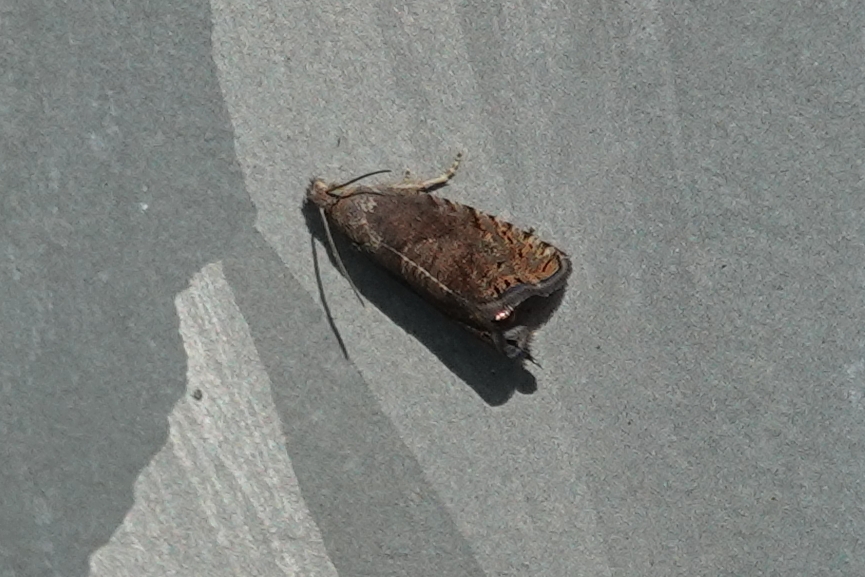
good. There were lots of micro moths flying
around and I managed a couple of shots that Antony has helped identify.
 |
Aethes smeathmanniana
|
 |
| Columbine |
 |
| Dichrorampha aeratana |
 |
Ground Ivy
|
There were plenty of flowers in bloom as I walked up to and
alongside Longhoes with Winter Cress, Speedwells, Bugle and Rockroses along the
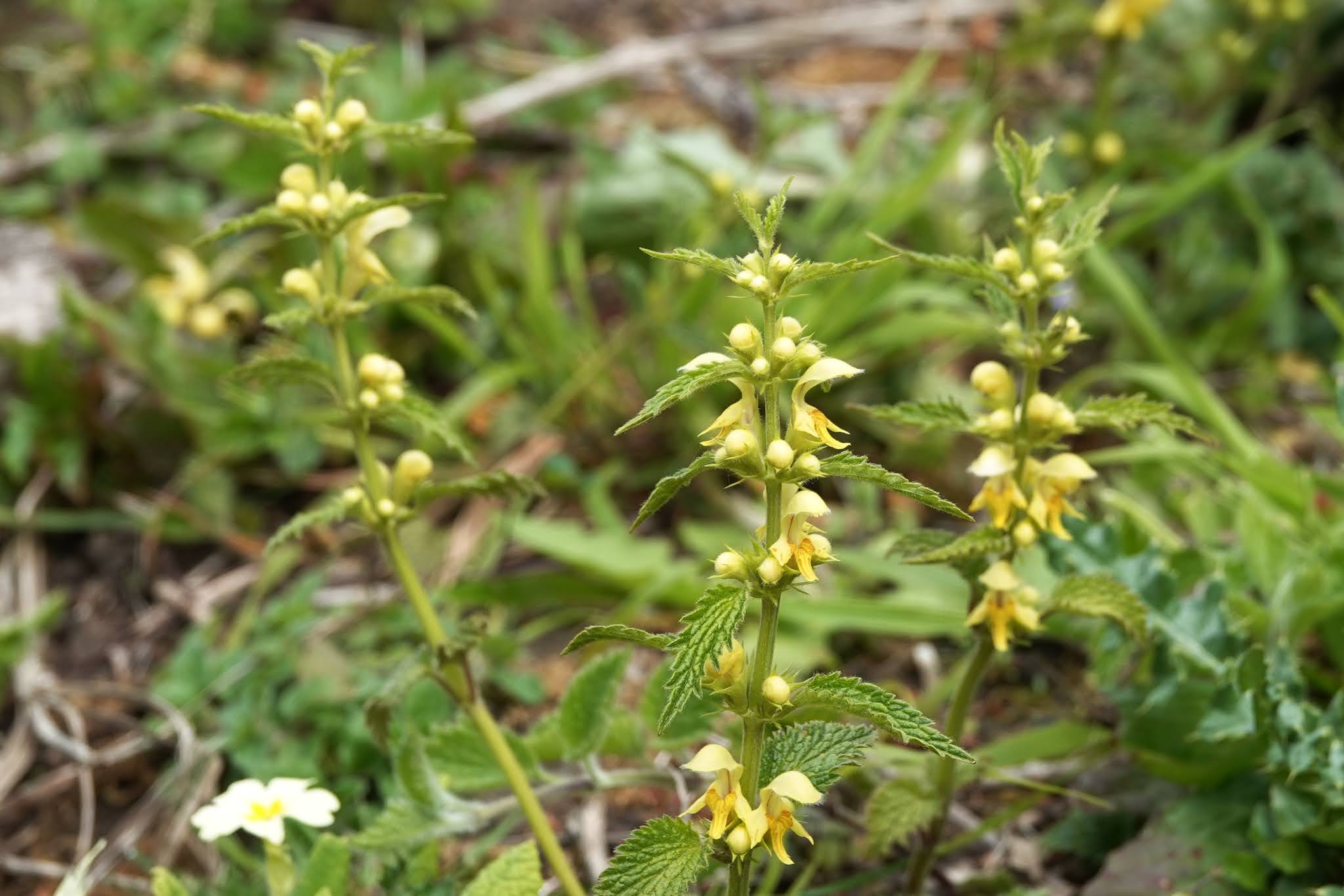
edges and clumps of Yellow Archangel illuminating the shady areas beyond the
borders.
 |
Possibly Changing Forget-me-not
|
 |
| Field Forget-me-not |
 |
Germander Speedwell
|
 |
The view over Longhoes
|
 |
White Campion
|
 |
Yellow Archangel
|
 |
| Winter Cress |
 |
Common Rock Rose
|
The sun poked through and Butterflies appeared as if by
magic with Orange Tips, three Whites and Brimstones zooming up and down and two Wall
Browns were on the same stretch of path as I saw them last summer.
 |
Wall Brown
|
Down in the corner near the railway the big Bramble clump
was alive with insects despite the lack of blossom with Holly Blue joining the
list along with dancing Green Longhorn Moths with their oversized antennae
waving randomly. There were plenty of
male Andrena bees who, to be honest, I ignored and several Nomads that I will
have a stab at while a big fat hairy Tachina fera was my first of the year.
 |
Green Longhorn - Adela reaumurella
|
 |
Tachina fera
|
 |
| female Nomada flava |
There were a couple of territorial Myathropa florea and a
Xylota segnis was scurrying around the Bramble leaves looking for sap but
cautiously avoided the waiting embrace of White Crab Spider that was lurking in
plain sight.
 |
Myathropa florea
|
 |
Xylota segnis
|
 |
Misumena vitia - White Crab Spider
|
 |
Dark Bush Cricket nymph
|
I walked up past the cow meadow with its carpet of Ground Ivy, Bugle
and Bulbous Buttercups and Small Heaths, Large and Green Veined Whites were
nectaring while a male Brimstone was down on the path after salts.
 |
| Brimstone |
 |
Small Heath
|
 |
| Bugle |
 |
Bulbous Buttercup
|
Dove’s foot Cranesbill and Common Gromwell were along the
fence line with lots of Germander Speedwell and a female Orange Tip even landed
and posed for a few shots on a Shepherd’s Purse seed head.
 |
Orange Tip
|
 |
| Gromwell |
 |
| Dove’s foot Cranesbill |
The view was, as ever spectacular and it always manages to
look different upon every approach. I dropped down into The Valley with the
silvery fresh leaves of Whitebeam pointing at the blue where Skylarks sang and a
Buzzard with a single white outer primary was mobbed by protective Carrion
Crows who obviously had a nest in the big Ash tree.
 |
The Valley
|
 |
| Whitebeam |
 |
| Buzzard |
The Dandelion patch was especially lush with yellow pom-pom
heads interspersed with clocks ready to disperse and the flatter seed heads of
the Coltsfoot that had already had its time in the sun.
 |
Dandelions and Coltsfoot
|
Crossing the railway took me into the part of Mill Hill Wood
that I have not visited before and that is why I had not found the Lady Orchids.
Today was different and the very precise directions I had been given took me to
a wonderful spread of this most robust of woodland dwellers. I counted about 30
amongst the trees and the sunny spell lasted long enough for me to appreciate
the subtleties of colour amongst their flouncy dresses. They were far bigger than any I have seen in
East Kent and the tallest were about 20 inches tall.
 |
Lady Orchids
|
The Orchids were wonderful but I was equally pleased to find
fine Stinking Hellebore just beyond them.
I saw some at The Larches last year but this was my first time in the
Ranscombe complex. The flowers were over but the flower bracts and forming seed
pods were still very impressive. I remember
seeing and smelling it up in the foot hills of Mont Venteux in the Central
Massif on a quest for Citrel Finch and Rock Bunting with Bradders about ten
years ago.
 |
| Stinking Hellebore |
I lopped back up toward the main path and went to check on
the Fly Orchids in their little compound.
They were tricky to spot but I found five in flower but all had just a
single tiny little demonic Donnie Darko bunny staring back at me. There was a good ground spread of Wild
Strawberry but the Stinking Iris was not even budding.
 |
Fly Orchid
|
 |
Black Bryony
|
Continuing up towards Brockles, I found a couple more
Tachina fera and several Nomada marshamella in a little clearing along with the
emergent forms of White Helleborines and bobbly Sanicle heads and as I exited
the wood it revealed a bank of incoming cloud and a few spots of rain although
it was seemingly tipping down just a few short miles away at home.
 |
| Columbine |
 |
| Nomada marshamella |
 |
| Sanicle |
 |
Tachina fera
|
 |
| White Helleborine |
 |
The vivid green is plastic tubes around young grape vines
|
I looked to the skies with the banks of black and white clouds
and hoped they would part just long enough to warm the next part of my walk
where I expected butterflies to be dancing. The sun kept me waiting but
eventually appeared and out they came. Dingy Skippers emerged to bask on the
worn chalky path where they sat at identical angles for all the world like
looking down on a squadron of Spitfires lined up for takeoff and after a minute
or two they would do just that and aerial dog fights would ensue.
 |
Dingy Skippers
|
I counted 38 in about 300m of track but they were not alone
with a single darting Grizzled Skipper and four gleaming Small Coppers for
company adding different wing formations with a ground crew of micro mining
bees and cleptoparasitic red tailed Sphecodes bees whizzing
in and out of burrows around them.
 |
Small Copper
|
That most tricksy of butterflies to actually find, even the
Green Hairstreaks came down to find a few sheltered rays and dazzled me with iridescent
shimmer.
 |
Green Hairstreak
|
 |
Common Vetch
|
The Rooks and Jackdaws were playing across the meadows and
another pair of Buzzards patrolled above while two Lesser Whitethroats rattled
from adjacent hedgerows as I retraced my steps and headed up into the woods
following the Yellow Brick Road.
 |
| Yellow Brick Road |
I soon discovered my first good spread of Bluebells of the
day but there was little light so I played around with a gnarled old Chestnut
that had ‘photographic portals’ that I could use. I found a patch of Heath Speedwell, Lady’s
Smock and more robust clumps of Sanicle along with the last of the Lesser Celandines.
 |
| Bluebell |
 |
Heath Speedwell
|
 |
Lady's Smock
|
 |
Lesser Celandine
|
 |
Cantharis decipiens planning a route
|
I searched at the top of Kitchen Field for other Orchids but
only found some rather weedy looking Man Orchid spikes and a couple of White
Helleborines. Both species are in flower at other sites and I wonder if it has
been even drier on this inland part of the North Downs. There were plenty of insects to get absorbed
with though with a few Hovers and several other flies for which id help is
required.
 |
Anthomyiidae sp
|
 |
Myathropa florea
|
 |
Syrphus sp
|
 |
| Otites guttatus |
 |
Bibio sp
|
I female Eupeodes latifasciatus was a nice find just into
the chalk field but there were no Blue Pimpernel plants visible just yet. While
looking for the Orchids I disturbed a Wren from its almost perfectly camouflaged
nest tucked into the uprooted base of a fallen tree and I quickly moved on
before drawing attention to it and causing the irritated parent any more
consternation.
 |
| Eupeodes latifasciatus |
 |
Wren nest
|
Orange Tips danced around and Peacock and Red Admiral were
new to the day tally. The only small bee
that I was happy to name were a couple of Andrena haemorrhoa with their rusty
bums but there were so many tiny ones around too and I neither currently have
the time or patience to delve further.
 |
Fruity Peacocks
|
 |
Nomada flava/panzeri
|
 |
Nomada marshamella
|
Kentish Snails were day ‘roosting’ under leaves and I found
a nice Red-headed Cardinal yomping around disturbing the multitude of
Wolf Spiders that were inhabiting the leaf litter at my feet. Given the density of spiders I would not
fancy being anything without armour down there at ground level.
 |
Red-headed Cardinal- Pyrochroa serriticornis
|
The gravel track I took headed up to the main path on the
top of the ridge and I slowly worked the cleared margins where Wolf
Spiders scurried in all directions often
with eggs sacs in tow. Calliphora,
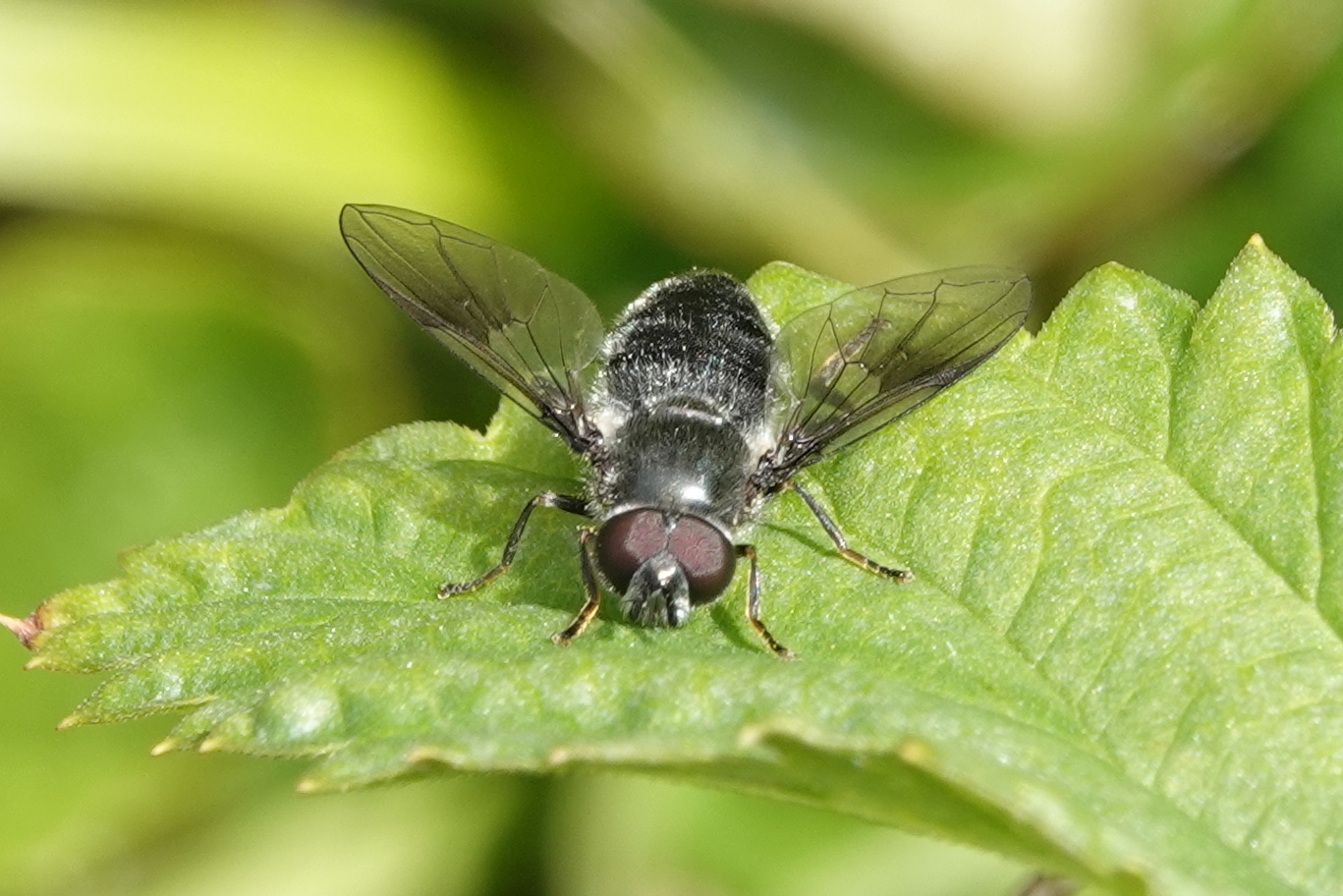
Sarcophaga and three Tachina fera basked on a wood pile and a chunky black
Hoverfly with silver hairs and fat thighs was later identified as Pipiza
austriaca.
 |
Tachina fera and Wolfies friend
|
 |
| Tachina fera |
 |
Sarcophaga - in fact two - I did not realise that he was clutching a female until I saw the extra wings!
|
 |
Pipiza austriaca
|
 |
| Pipiza austriaca |
 |
Pardosa Wolf Spider
|
As I reached the crest of the path I found another patch of
Bluebells and was pleased to find a single gleaming Snowbell amongst them. Yellow
Pimpernel, Yellow Archangel, Black Medick and my first Thyme Leaved Speedwell
were found in the margins and the Bracken and Male Fern fronds were beginning
to unfurl and two Painted Ladies and both Red Admiral and Peacock were down on
the path.
 |
Scarlet Pimpernel
|
 |
| Yellow Pimpernel |
 |
Black Medick
|
 |
| Snowbell |
 |
| Milkwort |
 |
Painted Lady
|
 |
Thyme Leaved Speedwell
|
 |
Yellow Archangel
|
 |
Male Fern
|
Once on the main drag I ambled back down towards home with a
single Speckled Wood becoming the 16th species seen on this walk and
the suspected Lily of the Valley was now a verdant green pathside patch
although there were no flowers as yet.
 |
Lily of the Valley
|
The sun came out again as I reached the last of the Bluebells and I was
able to get low down for some arty shots and it was here that I actually had my
most engaging encounter of the day when a little rusty Bank Vole came out to
forage just a few feet from where I was sitting. I often hear the rustling of
rodents and the squeaking of Shrews on my walks but seeing any of them is
always special.
 |
Bank Vole
|
From here I diverted to have a look for another clump of
Lady Orchids that I had been told about and found them safely shielded by a
fence from the forestry work that had been going on around them. Close up the Ladies ‘dresses’ (more like bell
bottomed trousers!) are even more intricate with little purple tufts dotted all
over them.
 |
Special Ladies
|
Brimstone and Orange Tips were in the clearing and visiting
the Lady’s Smock and Bluebells and I discovered a new (to me) patch of Early
Purple Orchids on the path back up through Clay Pond Wood toward the railway where
Germander Speedwell grew in lush patches and a female Anthophora plumipes was
busy visiting the spires of Bugle.
 |
Anthophora plumipes on Bugle
|
 |
Early Purple Orchid
|
 |
| Early Purple Orchid |
 |
Early Purple Orchid - a very loose flowered one
|
 |
Germander Speedwell
|
 |
Greater Stitchwort
|
 |
Lady's Smock
|
 |
Brimstone on Bluebell
|
 |
Wood Spurge
|
 |
Yellow Archangel
|
 |
Lords and Ladies
|
 |
Dog Violet
|
A couple of what I think were Cheilosia variablis with their
very long delta wings were patrolling the herbage and Common Green and Hairy
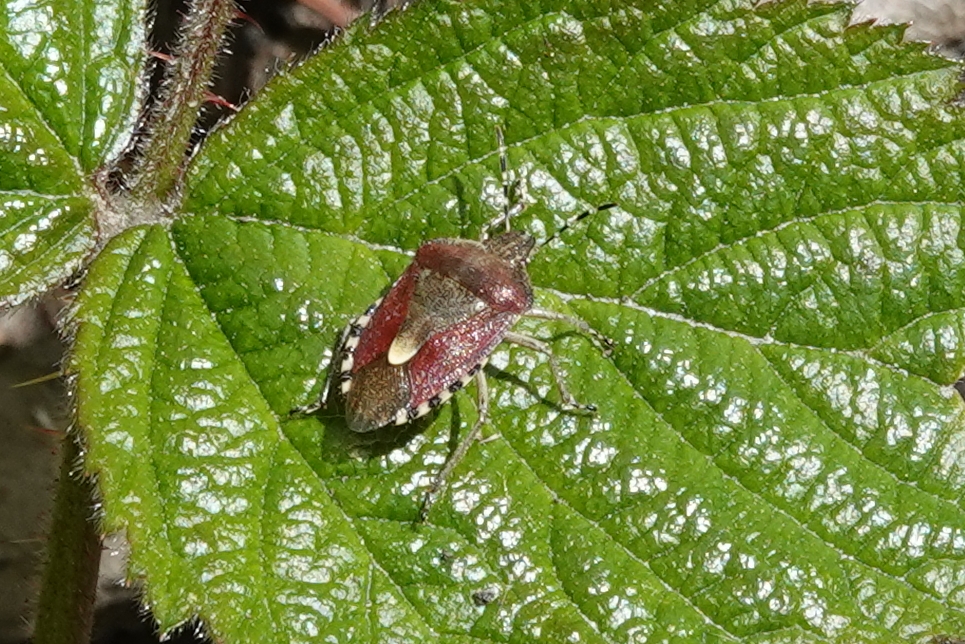
Shieldbugs and Box Bug were noted along with a fine male Scorpion Fly. My first
Nuctenia umbratica for what feels like years was failing to blend in on white
gate post and was guarding her egg sac.
 |
| Box Bug |
 |
Common Green Shieldbugs
|
 |
| Hairy
Shieldbug |
 |
Scorpion Fly
|
 |
| Nuctenia umbratica |
 |
Cranefly - Tipula vernalis I reckon
|
 |
Bombus lapidarius
|
I was hoping for some early blue butterfly action by the
Green Bridge over the railway but there was barely any growth and the Oxeye
Daisies here were under a foot tall and have a long way to go and there were no
Vetches of any sort in flower yet and hence it was an insect free zone. The last stretch of path alongside CTRL
showed me that many more Early Purple Orchids had flowered since my last visit
although most were now over but I did discover several Sweet Chestnuts with
vivid red blister calls which Googling has revealed to be the response of the
tree to the presence of the tiny non native Dryocosmus kuriphilus wasp.
 |
| Dryocosmus kuriphilus galls |
 |
| Early Purple Orchid |
 |
| Peacock |
The last of the walk back down the road to home was punctuated
by a soaring female Sparrowhawk and an ever so slightly battered mkIII Ford
Cortina with a penchant for Prog Rock.
It was a long but much needed walk and a mini-reset at least
for the time being...